
Home / Field work / Blood and organ donation
Field work
Blood cannot be bought. It can only be given.
A single donation can help more than one patient. Our blood donation camps and organ donation talks help people to give, and to say yes when it matters most.
In our records
A donor, a nurse and a poster that says save lives
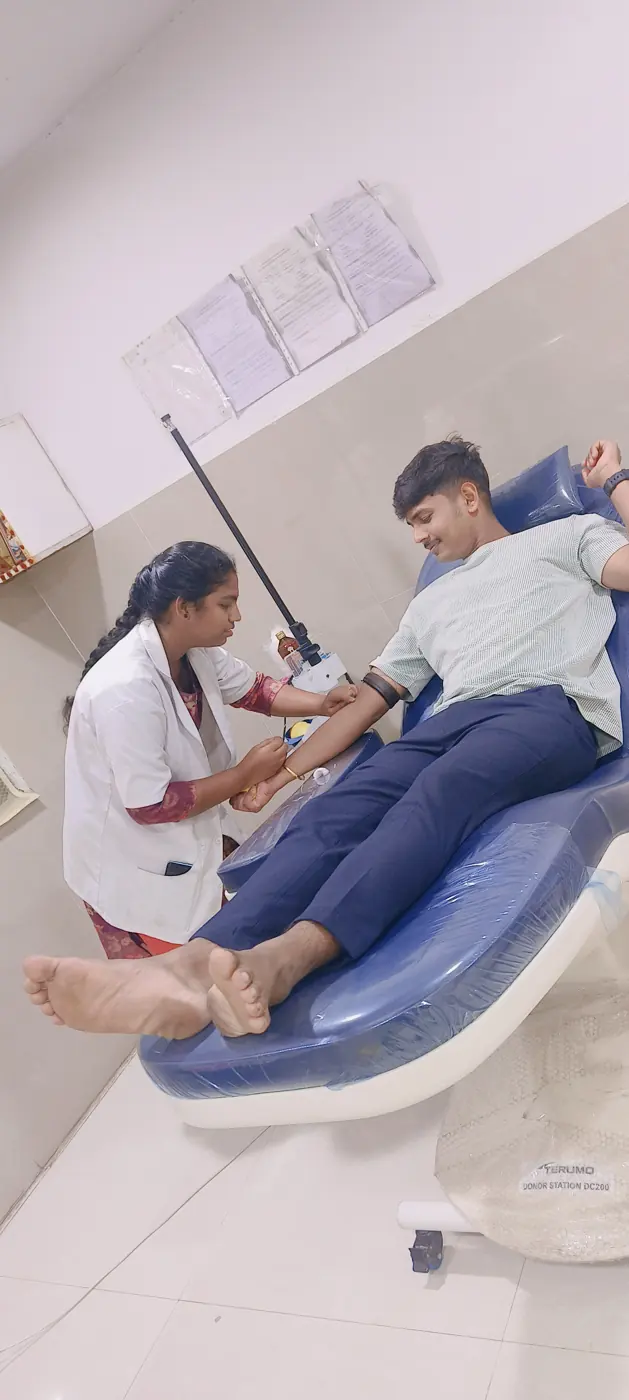
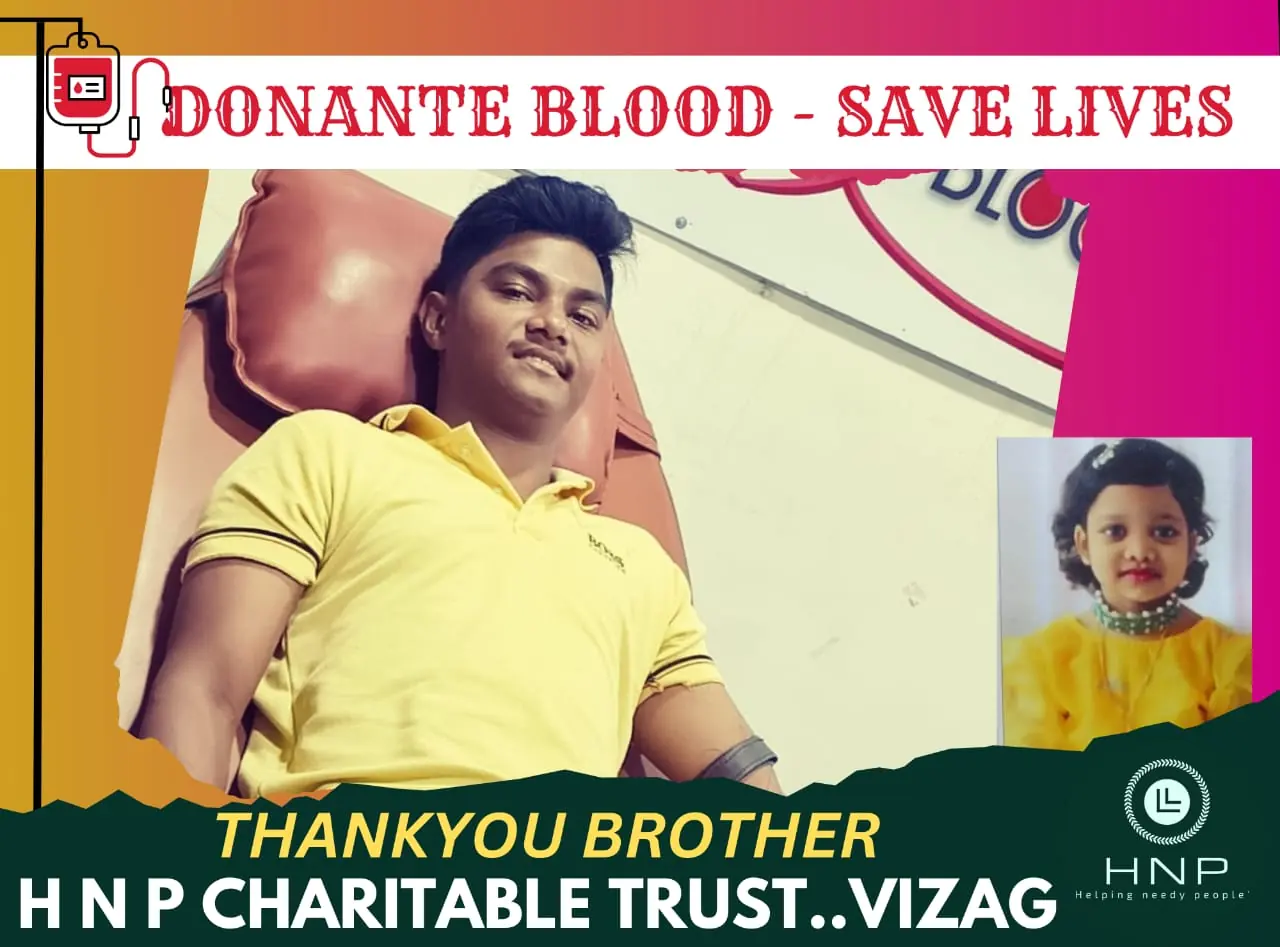
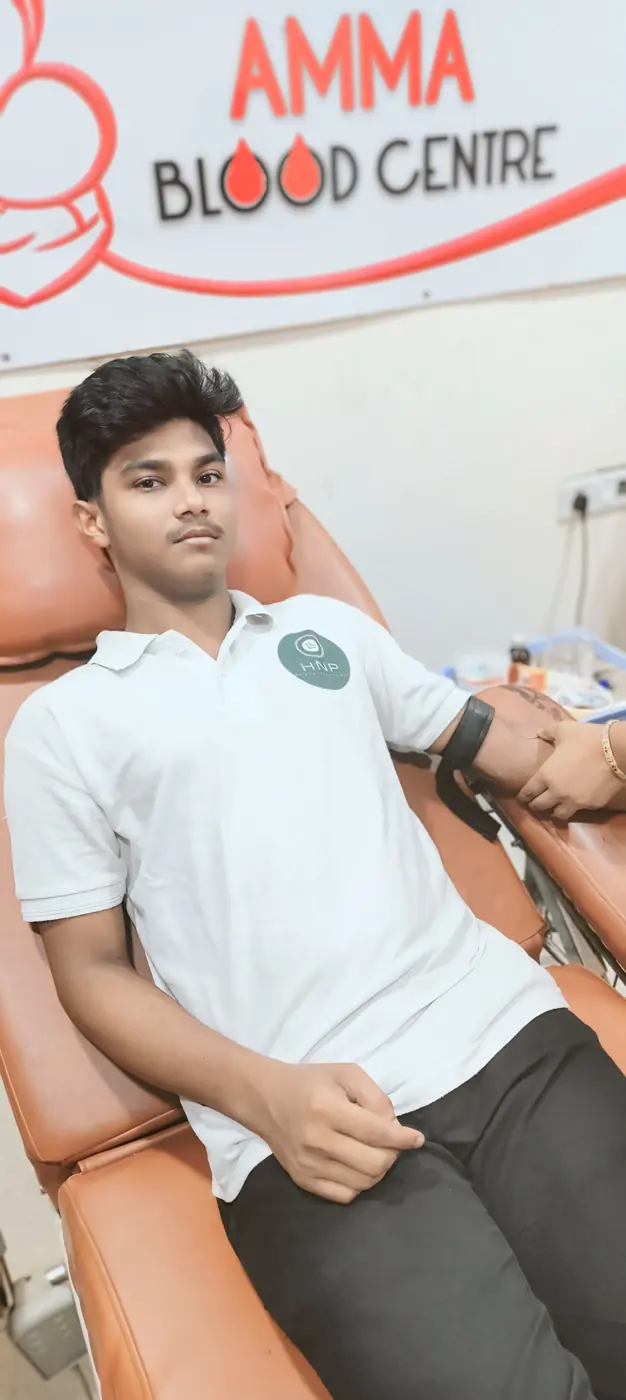
One photograph shows a young HNP volunteer in the trust’s t-shirt giving blood at a blood centre. Another shows a nurse attending a donor on a reclining chair at a camp. A poster made by the trust shows a smiling donor with the words donate blood, save lives.
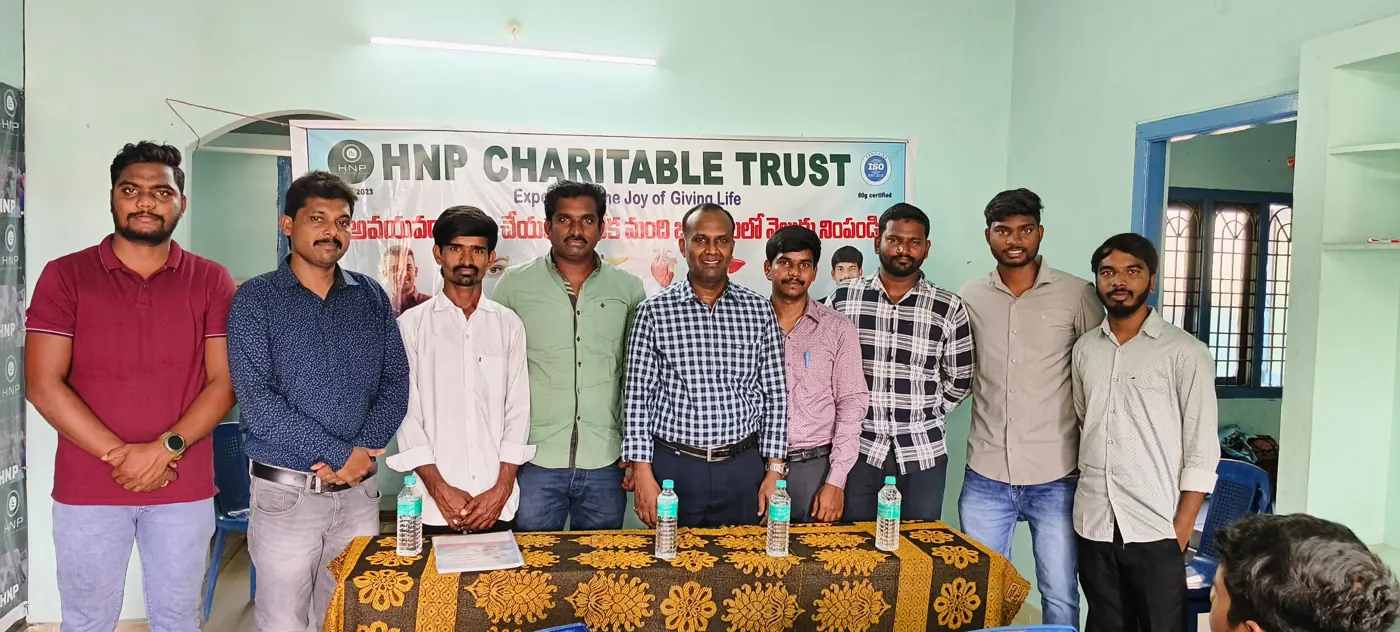
Other pictures show a camp with volunteers and a donor seated in front of a banner. A separate set of photographs shows a hall with a banner of the trust, volunteers and guests seated in rows at an organ donation awareness talk.
Blood and organs are the gifts that no shop can sell. Both depend on people who are willing to give, and on families who are told, in advance, what giving means.
Who can donate blood
In general, a healthy adult between 18 and 65 years of age who weighs at least 45 kilograms and has a haemoglobin level above the required limit can donate blood. A doctor at the camp checks each donor before the donation.
People who are unwell, who have had a recent illness or surgery, who are pregnant or breastfeeding, or who take certain medicines may be asked to wait. The doctor’s decision is final.
What happens at a camp
The donor registers, answers a short health questionnaire and has a quick check: weight, pulse, blood pressure and haemoglobin. If all is well, the donor lies back on a chair and a nurse takes about a pint of blood. The donation takes around ten minutes.
Afterwards the donor rests, drinks a glass of juice and eats a snack. Volunteers stay beside the donor until he or she feels well.
Why camps matter
Hospitals need blood every day for accident victims, mothers in childbirth, patients with anaemia and cancer and people undergoing surgery. Blood does not last long, so it needs a steady flow of donors.
A camp lets people who are willing but busy give blood close to home. It also helps people who have never donated to try it in a safe place with friends.
Organ donation in plain words
Organ donation means that after a person has died, or sometimes while alive, an organ such as a kidney, liver or cornea can be given to someone who needs it. One donor can save several lives.
Our awareness talk explains this in simple language. We say that it is a personal choice, that family members must know about it, and that it is done only in an authorised hospital.
Telling your family
The most important step in organ donation is to tell your family. When a person dies, the family is asked for consent. If they know the wish of the person, they can say yes at a very hard moment.
We encourage people who are interested to talk to their family, to learn about the official pledge process and to carry a card if they wish.
How you can help
Donate blood if you are eligible. Bring a friend. Offer a hall for a camp. Share our posters. If you are a doctor, a nurse or a lab technician, volunteer for a day.
If you or your family needs blood, call a hospital blood bank first. We can help you to reach more donors by sharing the message.


Before and after you donate
Eat a normal meal and drink plenty of water before you donate. Avoid fatty foods, alcohol and smoking for several hours. Sleep well the night before. Bring an identity card if you have one.
After you donate, rest for a while, drink fluids and eat a snack. Avoid heavy exercise and hot baths for the rest of the day. If you feel dizzy, lie down and tell a volunteer.
Myths about blood donation
Some people think that donating blood makes you weak, that it harms your health or that it is painful. For a healthy adult, a donation is safe. The body replaces the fluid in a day or two and the cells within weeks.
Some also think that donors can catch an infection. A new, sealed needle is used for every donor, so there is no such risk.
Organ donation myths and facts
A common fear is that doctors will not try to save a person who has pledged organs. In fact, the doctors who treat a patient are separate from the doctors who handle donation. A patient is always treated first.
Another fear is that organ donation is against religion. Most major religions support it as an act of compassion. If in doubt, speak to your religious leader and your family.
Where to learn more
Your nearest government hospital or recognised blood centre can tell you about blood donation and organ pledges. National and state programmes also have helplines and websites.
If you want us to hold a talk at your school, office or community hall, write to us with a date and the number of people. We will bring volunteers and posters.
Thank you, donors
To every person who has given blood or promised an organ, thank you. A quiet act in a hospital chair may save a person you will never meet.
If you donate, tell a friend. One donor who speaks up brings several more.
How it works
How to give blood at a camp
Five steps, about thirty minutes in all.
1
Register
Give your name, age, phone number and a short health history.
2
Check
A nurse checks weight, pulse, blood pressure and haemoglobin.
3
Donate
You lie back and a nurse takes the blood in about ten minutes.
4
Rest
You rest, drink juice and eat a snack.
5
Go home
You drink plenty of water and avoid heavy lifting for the rest of the day.
Questions
Blood and organ questions
Please speak to a doctor about your own health.
Is donating blood safe?
Yes. A new needle is used for each donor, and the doctor checks you first. Most people feel normal after resting.
How often can I donate?
Healthy adults can usually donate whole blood every three months. A doctor will advise you.
Will I feel weak?
Some people feel a little tired. Rest, water and a snack help. Avoid hard work for the rest of the day.
Can I donate if I have diabetes or high blood pressure?
It depends on your condition and medicines. The doctor at the camp will decide.
How do I pledge my organs?
Speak to your family and learn about the official pledge from a recognised hospital or the government programme. Our talk explains the steps.
Do you run a blood bank?
No. We hold camps and give donors a safe place to give. The blood is handled by a licensed blood centre.
Can my company host a camp?
Yes. Write to us with the number of people and a date. We will help to plan it with a blood centre.
Do donors get a certificate?
Please ask at the camp. Blood centres usually give a card or a certificate.
Is there an age limit?
Most blood centres accept donors between 18 and 65. The doctor at the camp will check each donor.
Can women donate?
Yes, if they meet the weight and haemoglobin requirements and are not pregnant or breastfeeding.
Keep reading
Join a blood donation camp
Ask us for the date of the next one. Bring a friend and a good breakfast.
Write to us
Ask about blood and organ donation
Tell us what you would like to know or do about blood and organ donation. A volunteer will call you back.
- +91 97036 30893 (call and PhonePe)
- +91 82972 92602 (second number)
- hnpcharitabletrust@gmail.com
- NPS Nilayam, Road No. 2, Gajuwaka S.O., Visakhapatnam, Andhra Pradesh 530026
Write to us
We use your details only to reply to this message. Read the Privacy Policy and the DPDP Act notice.