
Home / Field work / Widows support
Field work
Support for women who have lost their husbands
When a husband dies, a woman often loses her income, her home and some of her family. Our widow support programme gives groceries and eggs, and connects women with skills and advice.
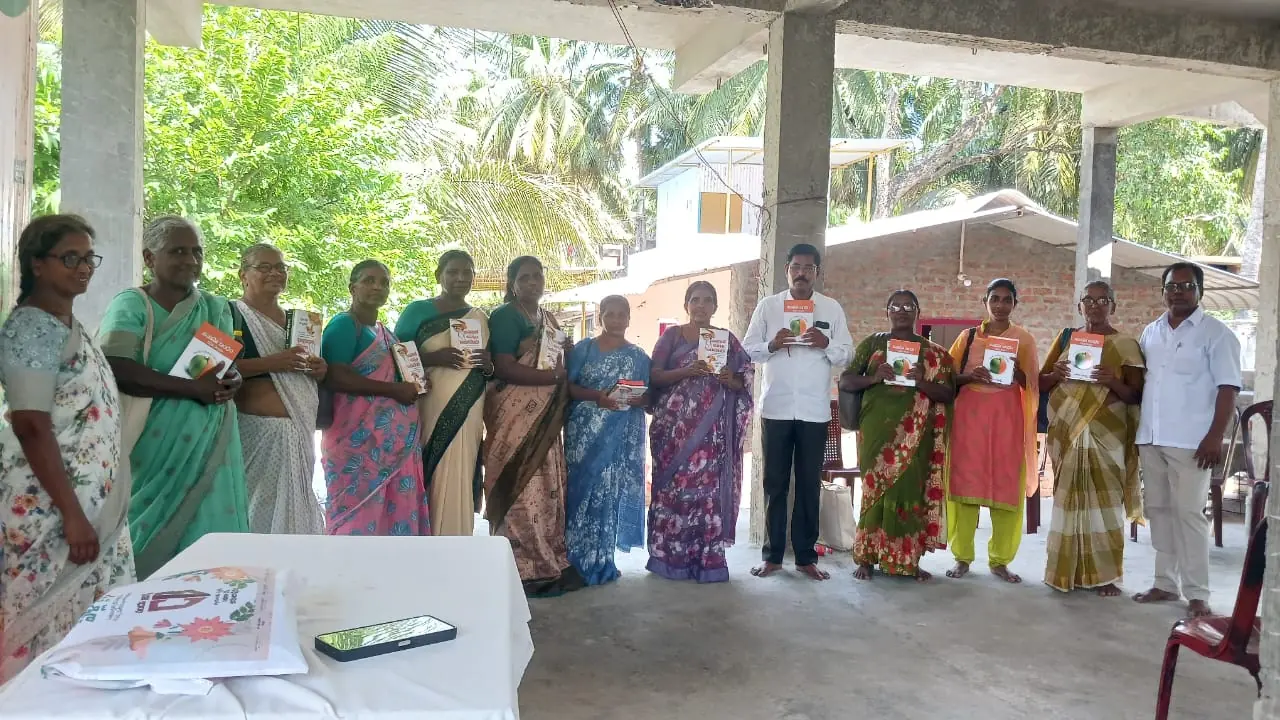

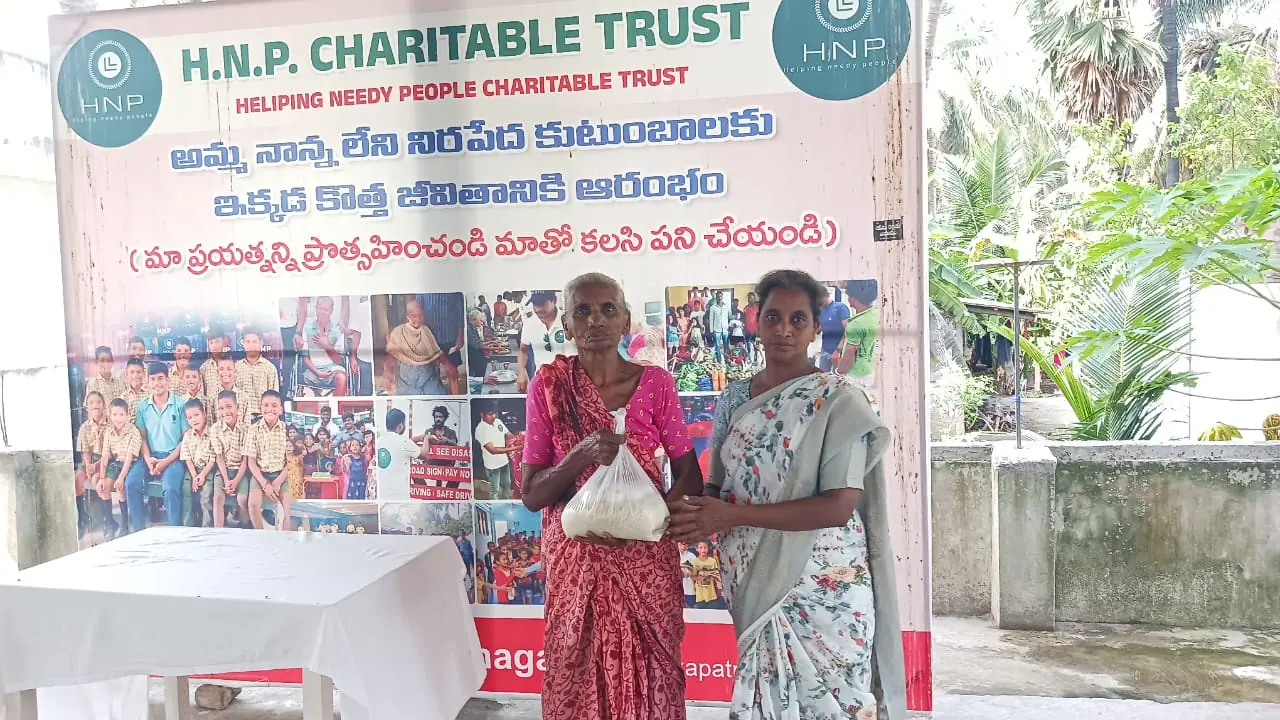
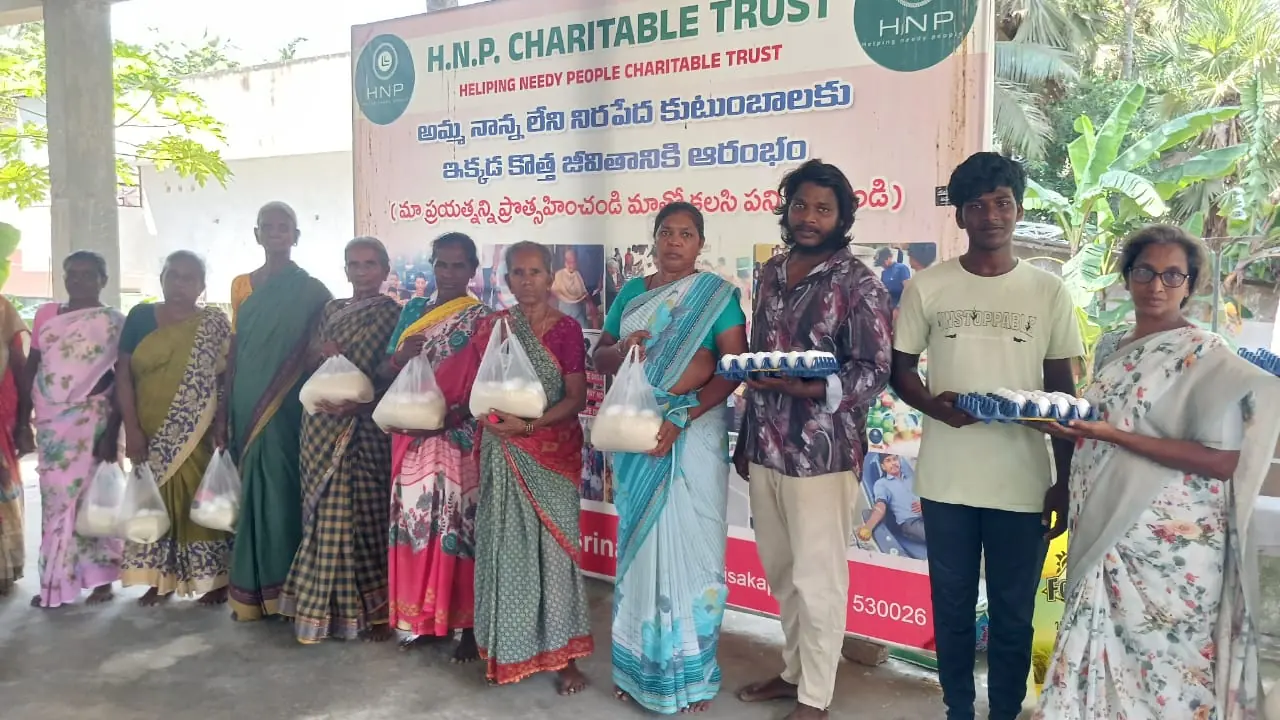
A day in the hall
Rows of women, a banner and trays of eggs
The photographs from our widow support programme show a covered hall near a row of coconut trees. A banner with the trust’s name hangs behind a table. Women stand in a long line or sit on benches. Some hold bags of groceries and others have trays of eggs on their laps.
Every woman in the photographs has lost her husband. The programme is a small step in a long list of needs: food today, skills tomorrow, and the knowledge that someone cares.
We take the photographs with permission and do not publish names.
The problems a widow faces
A widow may lose the family’s main income at once. She may also face pressure from relatives, delays in official papers and loneliness. If she has children, she must find money for school, food and medicine.
In many families, a widow’s needs are not discussed. She may be asked to stay at home, or to move out. Support from outside helps her to hold her ground.
What the programme gives
The programme gives groceries and eggs, which are some of the most useful items for a household. The groceries are bought in bulk and packed into bags. Eggs are given in trays.
Beyond food, the programme gives advice. Volunteers talk about schemes, savings, documents and skills, and connect women with the trust’s skill development program.
Papers and rights
A widow may need a death certificate, a ration card transfer, a bank account in her name, a pension form and a school certificate for her child. These papers can take months. Volunteers help to find the right office and fill the forms.
We also tell women where to go if they face threats or violence at home. The national women’s help line is 181, and the police can be reached on 112.
Earning a living
Some women want to work. Tailoring, embroidery, cooking, tiffin services and shop work are common choices. The skill development program offers short courses, and volunteers help with contacts.
A woman who earns a little each month is more secure and more respected in the family. That is the aim of all our work.
Listening
Often a widow needs a person who will listen. A volunteer who sits with her, hears her story and asks what she needs is giving as much as a bag of groceries.
We ask volunteers never to repeat what a woman tells them to others without her permission.
How we plan the day
We choose a covered hall near the women, so that they do not have to travel far. We announce the date through neighbours and community leaders. We prepare the groceries and eggs the day before, and we arrange chairs and drinking water.
On the day, volunteers welcome the women, write their names, hand over the groceries and talk to anyone who needs help.
Why eggs
Eggs are a cheap and complete source of protein. A woman who has lost the earner of the family may not be able to buy them for her children. Eggs are easy to cook and children like them.
We buy eggs fresh and carry them carefully in trays. A tray of eggs is one of the most useful gifts a household can receive.

Children of widows
The children of a widow may drop out of school if the family cannot pay. Our book and food programs can help them stay in school. We ask the mother about her children and offer help where we can.
A child who sees his mother supported by neighbours and volunteers feels less alone.
Respect and safety
We hold the programme in a place where women feel safe. We take photographs only with permission, and we do not publish names. A woman volunteer is always present.
If a woman tells us about a threat or abuse, we help her to reach the police or a women’s help line.
The role of neighbours
A widow is often best supported by neighbours. A neighbour can share a meal, look after a child for an hour or walk with her to an office. We encourage neighbours to take part in our programme and to look out for the women in their lane.
A community that cares for its widows is a community that cares for all its people.
How donors can help a widow beyond food
You can sponsor a child’s school fees or books. You can give a sewing machine or a small stock for a tiny shop. You can offer a job. You can help with a legal paper. You can be a friend.
Talk to us. We will find a way to match your gift to a woman’s need.
What a widow has told volunteers matters
Volunteers who sit with women hear what matters to them: a school fee paid, a medicine bought, a quiet place to sit. They learn that dignity is as important as food.
We keep these conversations private and use them only to guide the trust’s next steps.
Words for women who read this page
If you have lost your husband and are reading this page, please know that you can call us. You do not have to explain at length. A volunteer will listen, and will visit if you wish.
You are not alone, and your family is not alone either. Call +91 97036 30893 any day.
Keep in touch
If you would like to hear about the next programme for widows, write to us with your name and area. We will call you before the next one.
How it works
How a widow support day runs
Invite, register, give, listen.
1
Invite
Volunteers and neighbours tell women about the day.
2
Register
A volunteer writes down each woman’s name and the number of children.
3
Give
Each woman receives groceries and eggs.
4
Listen
Volunteers talk to women who want advice or help with papers.
Questions
Widow support questions
Women and their families can ask without any fear.
Who can attend?
Women who have lost their husbands. A neighbour or a relative can also tell us about a woman who needs help.
Is there a fee?
No. Everything is free.
Do you keep names private?
Yes. We do not publish names or photographs without permission.
Can you help with a pension?
We can tell you which office to visit and help to fill the form. The decision is made by the government office.
Can a widow join a skill course?
Yes. Ask a volunteer about the next course.
How can I sponsor groceries for a widow?
Call us. A grocery bag and a tray of eggs is a good gift, and we will send you a photograph.
Do you give money?
We give food and goods. In an urgent case, we discuss with donors what can be done.
Who should I call in an emergency?
Call 112 for the police or 181 for the women’s help line. Then call us.
Can I attend if I am not a widow?
This programme is for women who have lost their husbands. Other programmes are open to everyone.
Do you give clothes to widows?
Sometimes. Our clothes and blankets drives are open to all who need them.
Sponsor groceries for a widow
A bag of groceries and a tray of eggs help a household for days. Call us and we will arrange it.
Write to us
Ask about widows support
Tell us what you would like to know or do about widows support. A volunteer will call you back.
- +91 97036 30893 (call and PhonePe)
- +91 82972 92602 (second number)
- hnpcharitabletrust@gmail.com
- NPS Nilayam, Road No. 2, Gajuwaka S.O., Visakhapatnam, Andhra Pradesh 530026
Write to us
We use your details only to reply to this message. Read the Privacy Policy and the DPDP Act notice.