
Home / Our programs / Culture programs
Program 03
Festivals and celebrations that bring children and neighbours together
A child who sings on stage, waves a flag or cuts a birthday cake in front of friends learns that people care. Our culture programs give children that day.



15 August
Independence Day with the children we serve
Our photos from 15 August show a hall decorated with strings of tricolour flags. Children in school uniform sit on the floor, volunteers and guests stand behind a table of sweets, and each child receives a packet and a small flag.
The annual report says the trust works to promote humanity, brotherhood, peace and harmony through cultural activity. It lists poetry gatherings, Independence Day and Republic Day events, folk music and dance, street plays and festival days such as Holi.
We keep the events simple. There is a flag, a few words, a song and a treat. The point is that no child in our care watches a festival from the outside.
Why culture is part of care
A meal fills a stomach. It does not tell a child that he or she belongs. Children who grow up in a home for the needy rarely see their name on a poster or hear their friends clap. A small stage fixes that.
The annual report also says that culture programs build a gentler mood among students, because they start to understand the festivals of other religions. A child who has eaten sweets on a festival that is not his own will not forget it.
What happens on the day
The hall is cleaned and decorated in the morning. Children arrive in their best clothes. A guest raises the flag or lights a lamp, and children sing or recite. Volunteers serve sweets and snacks, and photographs are taken so that every child has a picture of the day.
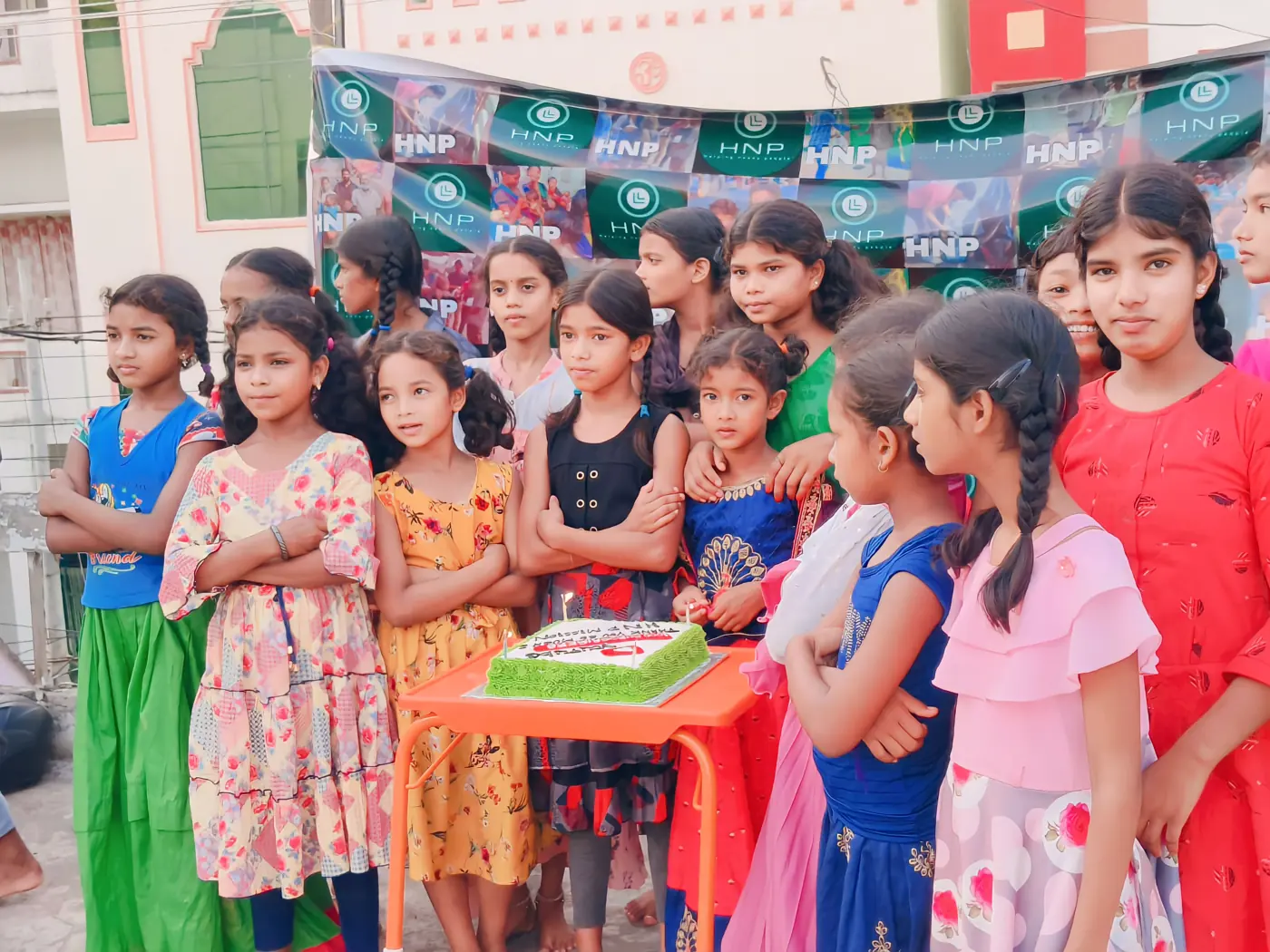
Birthdays work the same way. Photos from our visits to children’s homes show a cake on a small table, girls in a line behind it, and volunteers clapping. For many of these children, it is the only birthday cake of the year.
The festivals we mark
Independence Day and Republic Day are the fixed dates. Festival days follow the calendar: Sankranti, Holi, Diwali and Christmas are all celebrated in homes the trust visits. We do not ask a child which religion his family follows before inviting him to a celebration.
The annual report mentions several formats that the trust wants to support: kavi sammelan, mushaira, street plays, qawwali and shows of folk music and dance. We take up whichever format a local group is ready to run.
How you can help
You can help by giving sweets, snacks, flags or decorations, by performing a song or a dance, or by sponsoring a cake for a children’s home. You can also offer a hall for the day.
If you run a school, a dance class or a music group, call us. A child who gets to perform in front of a real audience never forgets it.
A good celebration checklist
A celebration for children needs a plan that fits the children, not the guests. Keep the programme short, so that small children do not get tired. Give each child a role, however small: holding a flag, handing out a sweet or reciting a line.
Seat children where they can see the stage. Keep a volunteer near the door and another near the food. Keep a first-aid box and a bottle of drinking water within reach. Finish before the children are hungry or sleepy.


Songs, stories and street plays
A street play can carry a serious message in ten minutes. Children learn from watching a story about a missed school day, a cleaner street or a kind neighbour. A story told in the language they speak at home is always remembered.
Folk songs and dances are another way. Many children know a song from their grandparents. Giving them a stage tells them that what they know has value.
Respect for every faith
The annual report says the trust works to promote humanity, brotherhood, peace and harmony. In practice it means that every festival is welcome and that no child is asked to take part in a ritual that is not his own.
We invite children to watch, to eat, to sing and to join in what they are comfortable with. A neighbour’s festival is a chance to learn.
Safe photographs
Our photographs of celebrations show faces of children. We take pictures only with permission from the home or the family, and we do not publish names. If a caretaker prefers that a child does not appear, we leave that child out.
We also ask guests to avoid posting photos of children on personal pages unless the home says it is fine.
Ideas for a small-budget celebration
A celebration does not need a stage or a sound system. A clean room, a few flags, a song led by a volunteer and a packet of sweets for each child is enough. If the budget is small, we cut the decoration and keep the sweets and the song.
Children enjoy making their own decorations. A morning of cutting coloured paper into flags and garlands is a good activity and costs very little. The finished hall is something the children made, and they look at it with pride.
If there is a little more money, add a short skit by older children, a drawing contest with small prizes, or a group photograph taken in front of a banner. The photograph is a keepsake that the children will want to see years later.
How it works
Planning a celebration
Four steps from idea to the last sweet.
1
Choose the day
A festival, a national day or a birthday in the home.
2
Gather
Sweets, snacks, flags, a speaker and a simple stage.
3
Celebrate
Children sing, recite or just sit together and eat.
4
Remember
Photos are shared with the home and with donors.
Questions
Culture program questions
Anyone who wants to share a song or a story with children is welcome.
Who attends your events?
Mostly children from the homes and neighbourhoods we serve, with volunteers and a few guests.
Can my school students perform?
Yes. Call us and we will fix a day and a hall. A short song or dance of about five minutes is ideal.
Do you run events in schools?
We run events where we are invited. We have also held Independence Day events in a hall decorated for the day.
Do you serve food at events?
Yes. Our event photos show sweets and snacks being handed to each child by hand.
Can I sponsor a birthday cake?
Yes. Call us to choose a home and a date. A volunteer will buy the cake and send you the photo.
Is there a fee to take part?
No. All our events are free for children and families.
Do you pay performers?
Most performers are volunteers. If you need transport costs, tell us and we will see what can be arranged.
How long does an event last?
Usually between one and two hours, with sweets and snacks at the end.
Can a company sponsor an event?
Yes. Call us and we will explain what the sponsor’s gift covers and how we will thank them.
Do you accept decorations and gifts?
Yes. Flags, balloons, small toys and stationery are welcome.
Can an individual volunteer to sing or tell a story?
Yes. A single singer, storyteller or magician is welcome. Call us with a short description of what you will do and how long it takes.
Do you hold events outside Visakhapatnam?
Our events so far have been in and around Visakhapatnam. If a group elsewhere wants to hold an event with us, we are happy to talk.
Give a child a day to remember
A cake, a song or a packet of sweets is enough to make a festival real for a child.
Write to us
Ask about culture programs
Tell us what you would like to know or do about culture programs. A volunteer will call you back.
- +91 97036 30893 (call and PhonePe)
- +91 82972 92602 (second number)
- hnpcharitabletrust@gmail.com
- NPS Nilayam, Road No. 2, Gajuwaka S.O., Visakhapatnam, Andhra Pradesh 530026
Write to us
We use your details only to reply to this message. Read the Privacy Policy and the DPDP Act notice.