
Home / Our programs / Road safety awareness
Program 02
Road safety is learned on the roadside, and it starts with children
Every road accident leaves a family with a missing wage earner or a hospital bill. Our road safety program teaches simple rules to students and neighbours, so that fewer people are hurt.



The idea
Prevention is cheaper than a hospital
The annual report describes road safety as the prevention of road accidents by obeying rules and regulations. The most important part is careful driving, so that passengers, pedestrians and drivers stay safe. Better roads matter too, but a good road does not help if people ignore the signal.
The activities listed in the report are advocacy and prevention: speaking to people, putting up posters, and working with students and families. The trust also lists help after an accident, such as support with health and shelter, and the training of a village-level task force for emergencies.
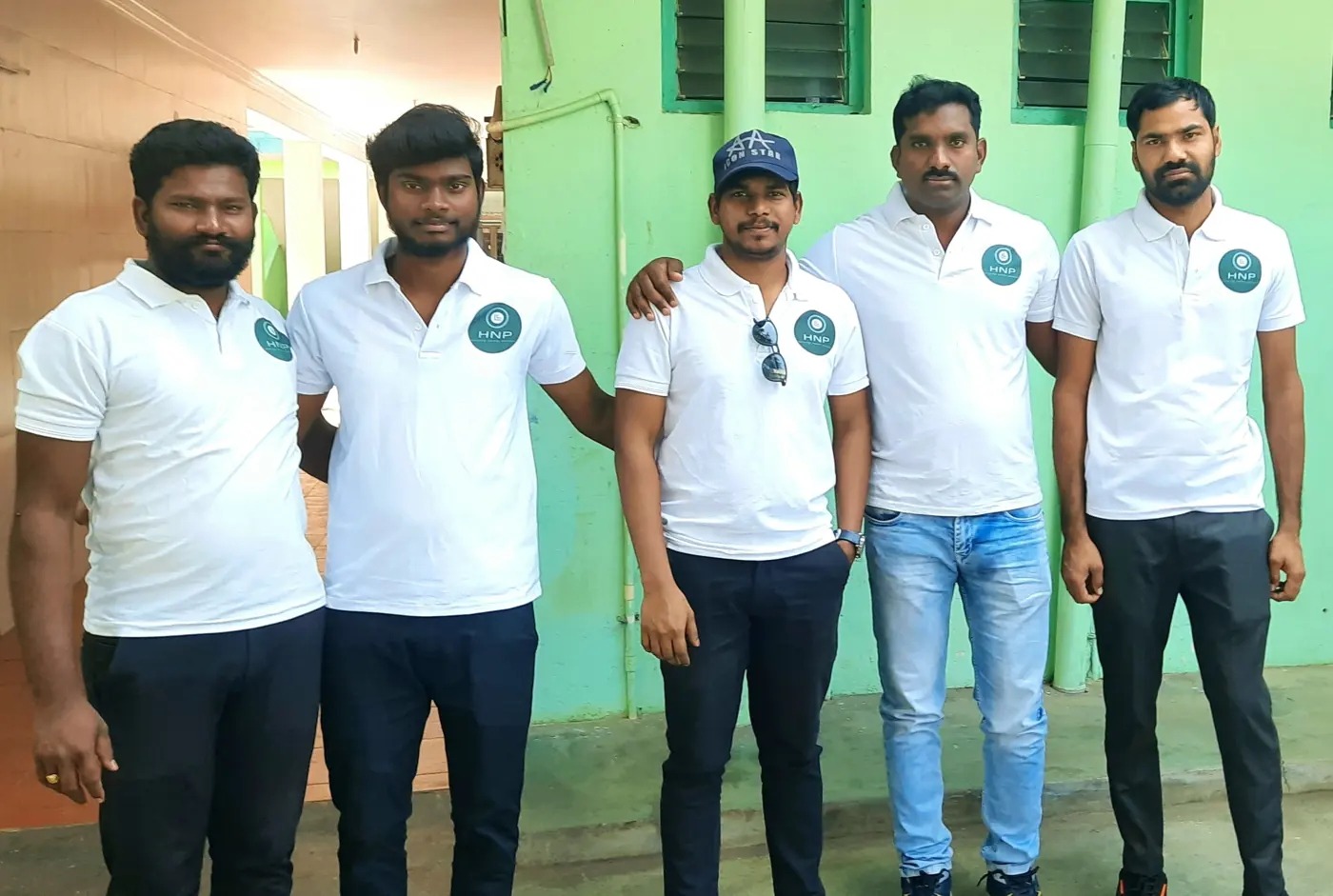
Our volunteers join school rallies, talk to children about crossing the road, and speak to parents about helmets and seat belts. A student who learns a rule at school often corrects an adult at home.
Rules that save lives
Most serious accidents involve a few simple mistakes. A rider without a helmet. A passenger without a seat belt. A driver who looks at a phone. A pedestrian who runs across a road without looking. A driver who ignores a red light because there is no police officer at the junction.
We teach these rules with plain examples. How far does a motorbike travel before it stops at 40 kilometres an hour on a wet road? What does a helmet do to a fall at that speed? Children remember the answers because they can try the crossing on a drawing on the floor.
Talking to students
Students are the best messengers. At school events our volunteers show the meaning of each colour of a signal, the zebra crossing, the pavement and the no-entry sign. Children hold posters that they made themselves and walk through the streets near their school.
We also teach older students what to do after an accident. Call for help first. Do not move a badly injured person unless there is a fire. Press a clean cloth on a bleeding wound. Stay until help comes.
Talking to adults
Adults are harder to change. We speak to auto drivers, delivery riders and parents at gate meetings. The talk is short and practical: wear a helmet on every trip, not only on the highway, and never let a child under the age of ten ride without a proper seat.
We ask families to make one promise after the talk. The promise is small enough to keep: a helmet for the pillion rider, no phone while driving, or never driving after a drink.
Help after an accident
An accident does not end when the ambulance leaves. A family may lose a wage earner or take a loan to pay for treatment. The trust looks at each case on its own: a food parcel, a visit, a link to a doctor, or school books for the children while the father recovers.
We keep our record of these cases private. If you know a family that needs help after an accident, call us and we will come and meet them.
Ten rules to teach a child
Always walk on the pavement or on the side facing traffic. Cross only at a zebra crossing or where an adult can see you. Look right, then left, then right again before you step. Never run across a road to catch a bus on the other side.
Never play on the road or near a parked vehicle. Never get in or out of a vehicle on the traffic side. Hold a parent’s hand in a crowd. Wear bright clothes in the rain and at night so that drivers see you. Never ride a bicycle without checking the brakes. Obey the traffic light, even when the road looks empty.
Helmets and seat belts: what the evidence shows
A helmet does not stop an accident. It reduces the chance that a head injury will kill or disable a rider. A helmet must fit well and be fastened. A loose helmet can fly off at the moment it is needed, and a cracked helmet must be replaced.
A seat belt keeps a passenger inside the vehicle and spreads the force of a crash across the strongest parts of the body. A child must never sit on an adult’s lap in a moving car, because the adult cannot hold the child in a crash.
Why speed is the biggest danger
The faster a vehicle moves, the longer it takes to stop and the harder it hits. At a pedestrian crossing near a school, a few kilometres an hour can be the difference between a bruise and a broken bone.
We ask drivers to slow down near schools, hospitals, bus stops and markets. A driver who is in a hurry saves a minute and risks a life.
A short guide to first aid at the roadside
Call for help before you do anything else. Keep the injured person still, especially the neck and back. Do not give water to someone who is unconscious. Press a clean cloth firmly on a bleeding wound and keep pressing until help comes.
If a person is not breathing, a trained person can give chest compressions. If you are not trained, stay with the person and keep calling for help. We recommend that every school invites a trained first-aider once a year.
How it works
A road safety day
From a phone call to a rally in four steps.
1
Invite
A school, a colony or a workplace calls us and picks a date.
2
Prepare
We bring posters and a short script about helmets, signals and crossing.
3
Teach
A volunteer speaks for twenty minutes, then children ask questions.
4
March
Students walk the nearby road with posters, and neighbours watch and read.
Questions
Road safety questions
Schools, colonies and workplaces can ask for a session at no cost.
Can you visit our school?
Yes. Call us with the date and the number of students. We will come with posters and a speaker.
Do you give helmets?
We have not run a helmet distribution drive as a regular activity. If a donor gives helmets for a particular group, we will hand them out ourselves.
What do you ask drivers to do?
Three things: slow down near schools, never use a phone while the vehicle is moving, and stop at every red light, with or without a police officer.
What should I do if I see an accident?
Call for an ambulance or the police, keep the injured person still, press a clean cloth on any bleeding, and stay until help arrives.
Do you work with the police?
The report mentions the activities and does not name a partner. For any joint event we ask the local traffic office for permission first.
How can I help?
Offer a hall for a session, give posters or banners, or join our volunteers on a road safety day.
Do you cover road safety for bicycles?
Yes. We talk about brakes, lights, reflectors and riding on the left, which matter a great deal to children.
Is there a session for auto and truck drivers?
We speak to drivers at gatherings where they are present and invite them to short talks. Rest and sleep are major themes.
What about night driving?
We ask drivers to switch on lights early, dip headlights and take a break every two hours.
Do you share materials?
Yes. Teachers can ask us for our posters and our simple lesson plan.
Bring road safety to your school or colony
We need a hall, a date and a few listeners. Everything else is ours.
Write to us
Ask about road safety awareness
Tell us what you would like to know or do about road safety awareness. A volunteer will call you back.
- +91 97036 30893 (call and PhonePe)
- +91 82972 92602 (second number)
- hnpcharitabletrust@gmail.com
- NPS Nilayam, Road No. 2, Gajuwaka S.O., Visakhapatnam, Andhra Pradesh 530026
Write to us
We use your details only to reply to this message. Read the Privacy Policy and the DPDP Act notice.