
Home / Field work / Children’s homes
Field work
Cake, fruit, a meal and a friend who comes back
Children in homes need visitors who stay. Our volunteers bring fruit, meals, cakes and time to homes in and around Visakhapatnam, including a home for children who use wheelchairs.


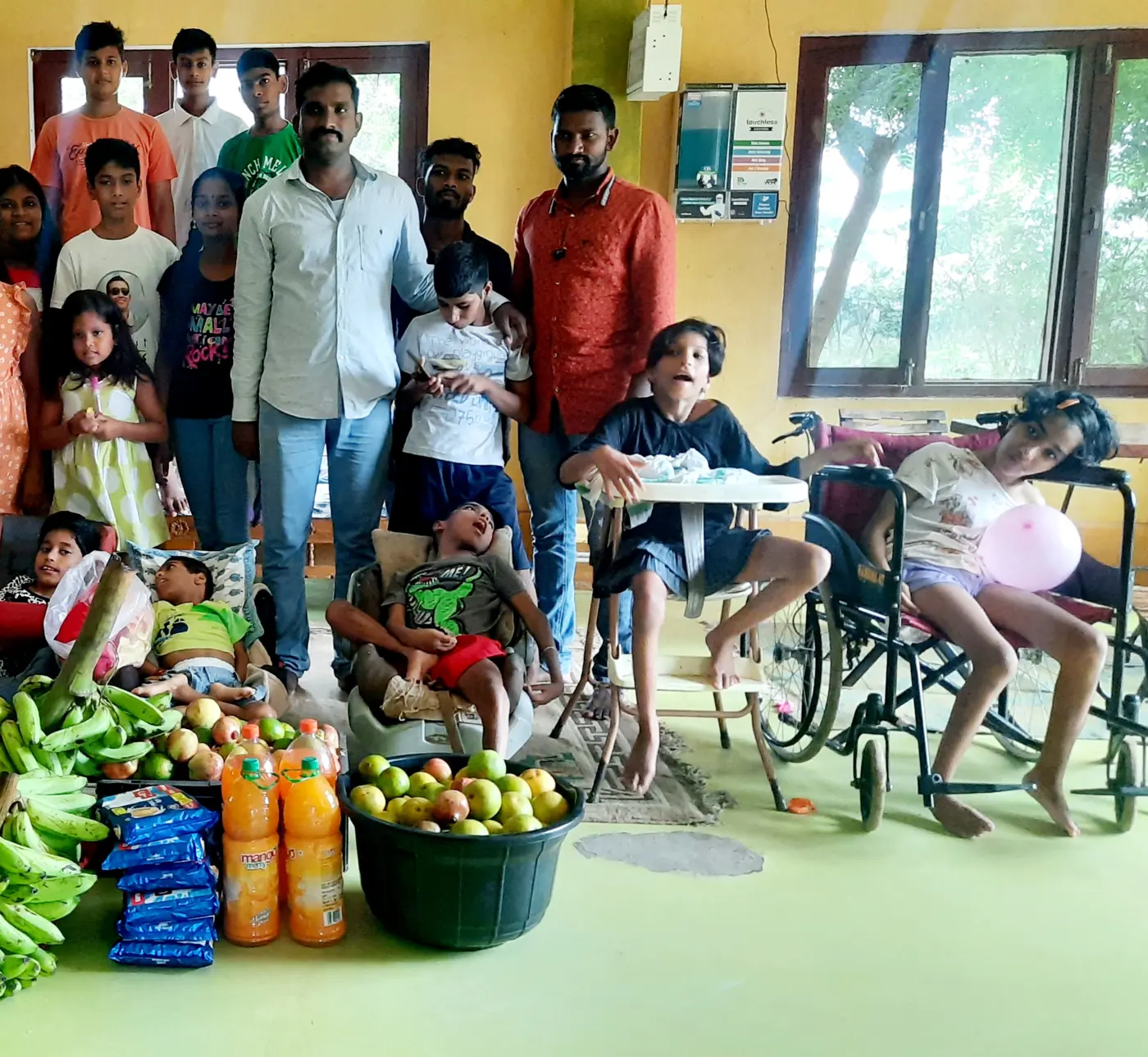
At Kondakarla
Children in wheelchairs, baskets of fruit and a long afternoon
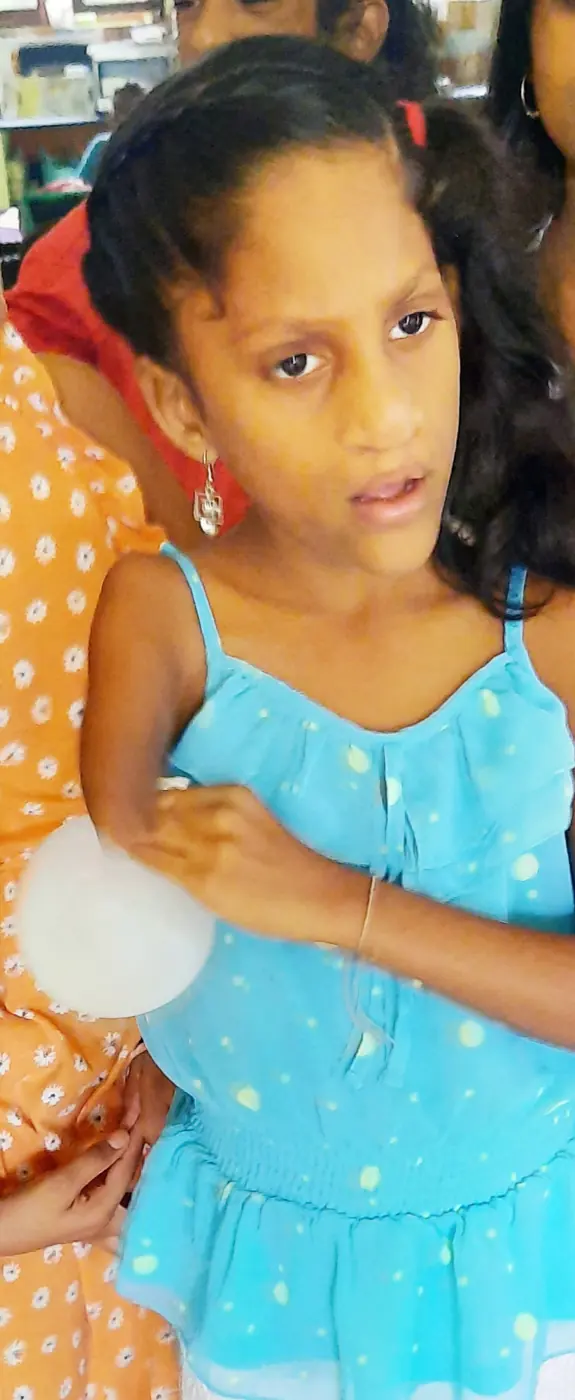
Our photographs from Kondakarla show volunteers and children together in a bright room. Some children sit in wheelchairs and special seats. Baskets of bananas, oranges and bottles of juice stand on the floor. A girl in a blue dress looks at the camera.
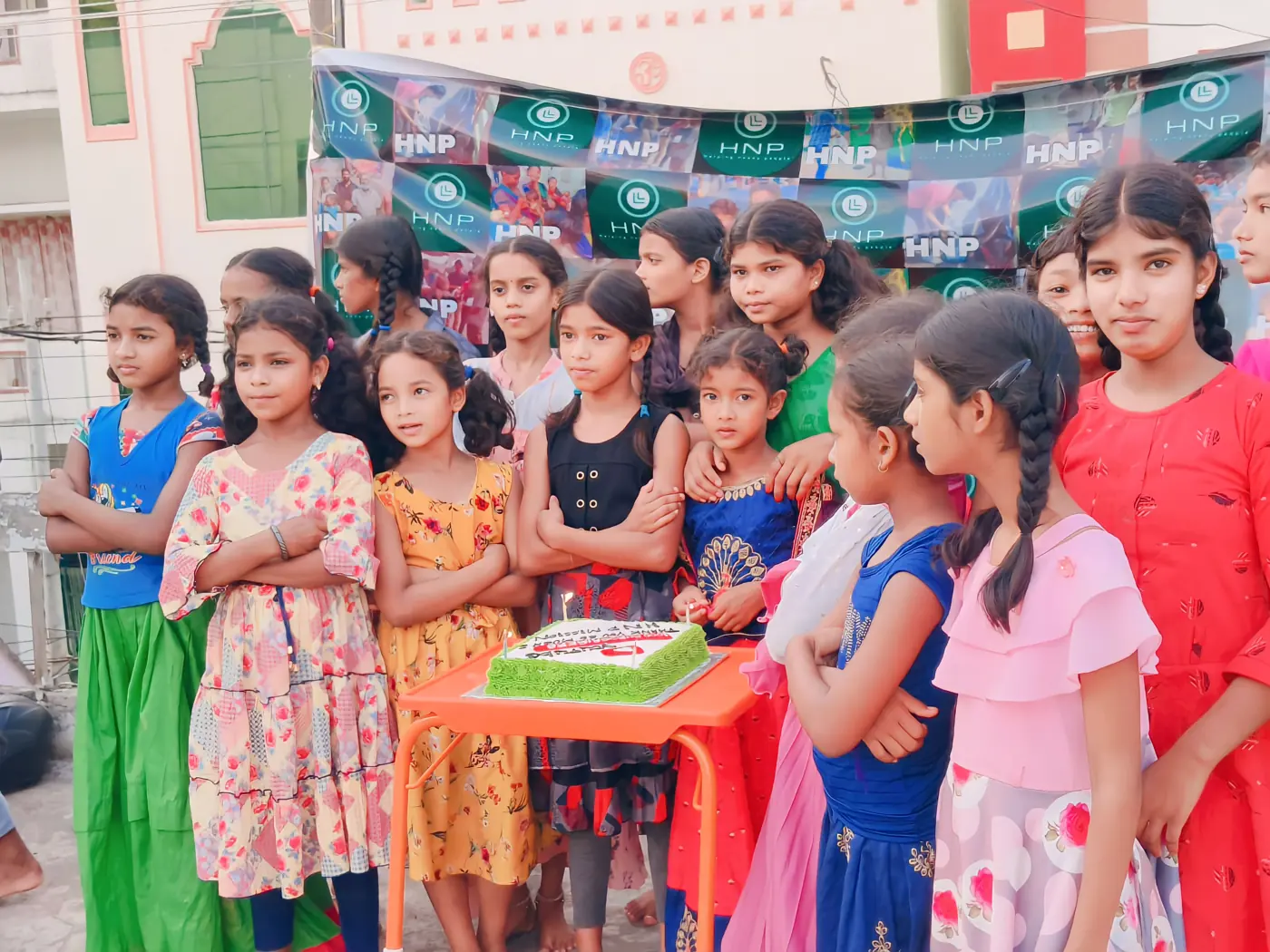
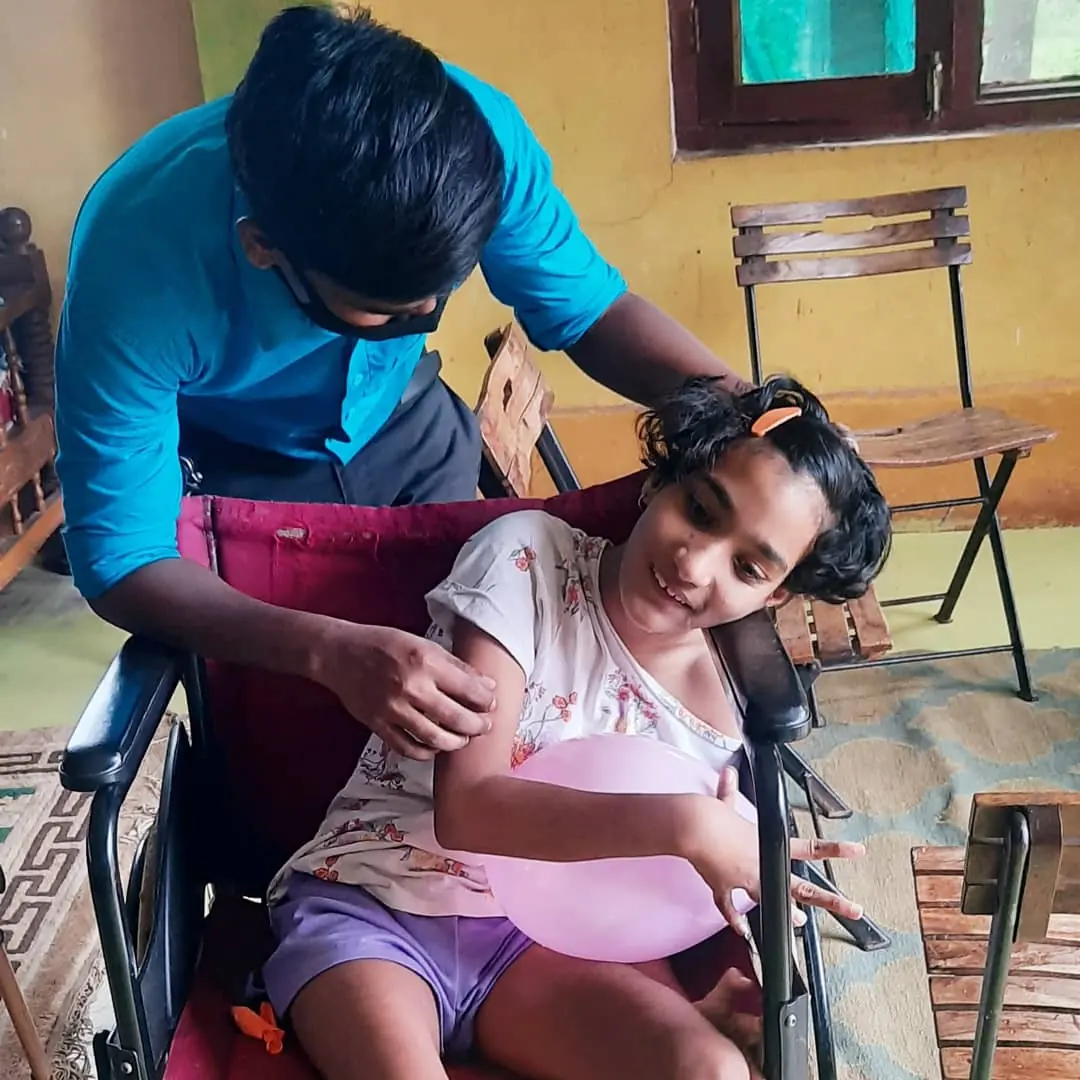
Other photographs show a birthday party. A cake sits on a small table, girls line up in front of it and volunteers clap. In another picture, a volunteer feeds a girl in a wheelchair, patiently, one spoon at a time.
Our records also include a long hall with a blue floor where children sit in a row and eat from steel plates.
What we bring and why
We bring what the caretaker tells us is needed: meals, fruit, groceries, cake, clothes or school things. A gift that the children do not need is a waste. A gift that the caretaker asked for is a relief.
We always bring time. Volunteers sit on the floor, play simple games, read a story or just listen. For children who have few visitors, that is the best gift.
Children with special needs
Some children cannot walk, speak or feed themselves. They depend on adults for everything. Their caretakers are often tired. A volunteer who sits beside a child and helps with a meal gives the caretaker a rest and the child company.
We follow the lead of the staff. They know each child’s habits and likes, and they show us how to help.
Birthdays and celebrations
Many children in homes have no birthday party. We bring a cake, sweets and a song. Every child, not only the birthday child, receives a piece, so that nobody feels left out.
A photograph of the party is shared with the home and with the donor.
Respect for children
Children are not exhibits. We take photographs with the caretaker’s permission, we do not publish names and we do not post photographs of children on personal pages. We do not ask children about their families or their past.
If a caretaker prefers that a child not be photographed, we respect that.
How to support a home
You can sponsor a meal, a cake, a week of groceries, a set of clothes or a school bag. You can teach a class or read to the children. You can offer your skills: haircutting, music, drawing or physical exercise.
Before you give, ask the caretaker what is needed. It saves time and money.
A birthday in a home
A birthday in a home is a rare event. The children rarely have a party. When we bring a cake, the children dress in their best clothes. The birthday child cuts the cake and the others sing.
Every child receives a piece. Volunteers give a small gift to the birthday child, and photographs are taken so that the child has a keepsake.
Games and stories
Volunteers bring simple games: ball, chain, carrom, riddles. They tell stories and read from a picture book. They draw with the children and sing songs.
These activities are not a luxury. They help children to learn, to trust and to feel safe.


When a child needs special care
A child who is unwell needs a doctor. A child who is sad needs a counsellor or a gentle friend. A child who has a disability needs a person who understands. We speak to the caretaker, who knows the child, and we ask what we can do.
We do not interfere with the home’s routines, and we do not give medicines.
Growing up
Children in homes grow up fast. They may have to leave at eighteen with little support. Skills, savings and a mentor are the best gifts we can give. Our skill development program and our book program are aimed at this stage.
If you can offer an apprenticeship or a first job, please tell us.
Seasonal gifts for homes
In the school season, homes need bags, books and uniforms. In winter, they need sweaters and blankets. In summer, they need fans, water coolers and light clothes. At festivals, they need sweets, decorations and new clothes.
We plan visits and gifts around these needs, and we ask caretakers to tell us what is coming.
Volunteer rules for home visits
Come with a partner. Wear the trust’s t-shirt. Put away your phone. Ask before you take a photograph. Do not give gifts to a single child. Do not make promises. Do not ask personal questions. Leave on time.
These rules protect the children and the volunteers, and they keep the caretaker’s trust.
Small things that children remember
A volunteer who remembers a child’s name. A volunteer who brings a favourite fruit. A volunteer who sits for ten minutes and listens. A song that everyone knows. A photograph that is shared back with the home.
These details are free, and they are what children talk about after the visit.
Ways for companies to help
A company can sponsor a meal for a month, give notebooks to all children, fund a repair or send a team to spend a Saturday with the children. We can plan the day with the caretaker.
We ask companies to give quietly and to avoid publicity that shows the faces of children.
Join a visit
Fill in the volunteer form and say that you want to visit a children’s home. We will tell you the date and what to bring. Please come with a patient heart.
Thank you for caring about the children.
How it works
A home visit
Call, bring, stay, thank.
1
Call
We speak to the caretaker and agree a day.
2
Bring
We bring what was asked for.
3
Stay
Volunteers spend time with the children.
4
Thank
We thank the caretaker and tell donors what happened.
Questions
Children's home questions
If you manage a home, please contact us.
Which homes do you visit?
Our photographs show visits to a home in Kondakarla, to children at a get-together in a hotel hall, and to other homes. We do not publish the names of all homes.
Can I sponsor a birthday?
Yes. Choose a date and tell us the number of children. We will buy the cake and sweets.
Do you give money to homes?
We give supplies and time. If a home has an urgent need that money can solve, we discuss it with the donor.
Can my child come with me?
Yes, with the caretaker’s permission. Children enjoy meeting other children.
Can I give toys?
Yes. Please give clean toys in good condition, enough for all children.
How do I know the gift reached the children?
We send a photograph and a message. You are welcome to join a visit.
Do you help children leave the home?
We help with school, skills and contacts when a child grows up. See the orphanage care program.
Who looks after children in the home?
The home’s own caretakers and staff. We support them and do not replace them.
Can I volunteer as a tutor?
Yes. Tell us the subject and the days you are free, and we will speak to the caretaker.
Do you take children on outings?
Our photographs include a get-together in a hotel hall. Outings depend on the home and on permission.
Plan a visit to a children's home
Pick a day and bring a cake. The children will remember it for a long time.
Write to us
Ask about children's homes
Tell us what you would like to know or do about children’s homes. A volunteer will call you back.
- +91 97036 30893 (call and PhonePe)
- +91 82972 92602 (second number)
- hnpcharitabletrust@gmail.com
- NPS Nilayam, Road No. 2, Gajuwaka S.O., Visakhapatnam, Andhra Pradesh 530026
Write to us
We use your details only to reply to this message. Read the Privacy Policy and the DPDP Act notice.