
Home / Our programs / Health check-up camps
Program 01
Free health check-up camps, close to where people live
Many families only see a doctor when the pain is already serious. Our camps bring doctors, nurses and volunteers to a hall in the neighbourhood, so that a check-up costs nothing and takes an hour.


What a camp is
A doctor, a table and a queue of neighbours
A health camp is not a hospital. It is a temporary clinic set up in a community hall or a school room for one day. Qualified doctors, nurses and community health workers sit at separate tables, and each visitor walks from one table to the next with a small card.
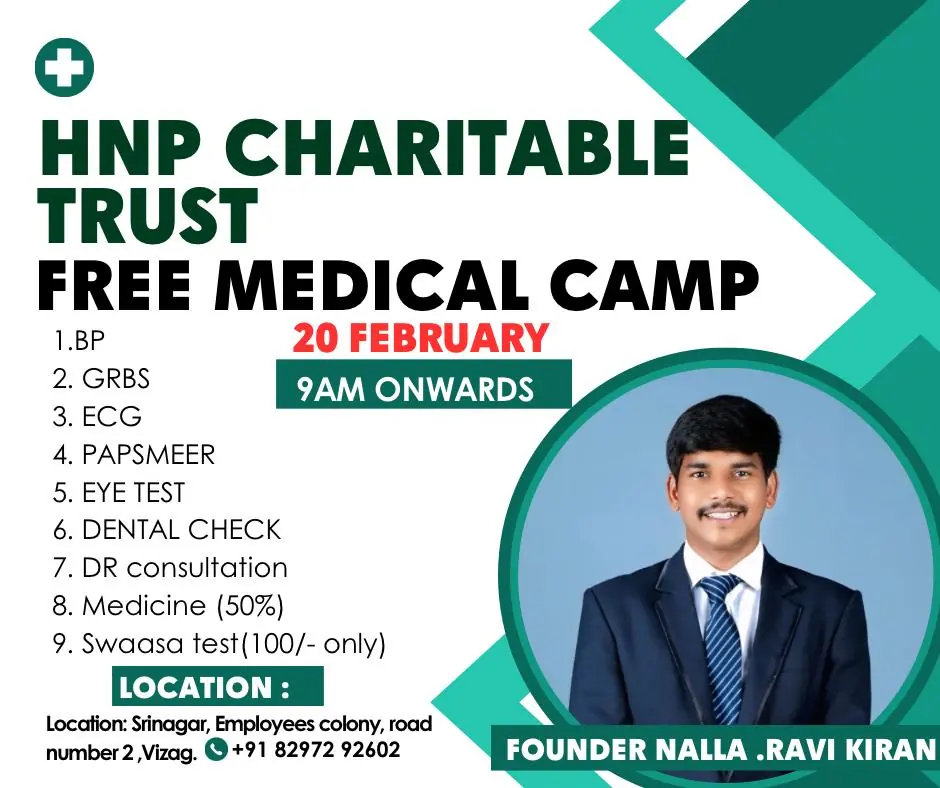
The poster for one of our camps lists what a visitor could expect: a blood pressure reading, a blood sugar test called GRBS, an ECG, a Pap smear for women, an eye test, a dental check and a consultation with a doctor. Medicines were offered at half price, and a lung-function test called Swaasa was offered for a token fee of one hundred rupees.
The camp was held at the trust’s own neighbourhood in Gajuwaka, Visakhapatnam, from nine in the morning, and the founder’s phone number was printed on the poster so that people could ask questions before they came.
Why a check-up matters before you feel ill
The annual report of the trust explains the idea in one line: a check-up is not only to find a disease, it is to find the risks that lead to a disease before they cause trouble. High blood pressure and high blood sugar often give no signs for years. A simple reading is the only way to know.
For a daily-wage worker, a day lost at a private clinic means a day without wages. That is why our camps are free to attend and why we choose a time that does not clash with work as far as we can.
A check-up also helps people who already know they are unwell. Someone who has been taking the same tablets for two years can ask a doctor whether the dose is still right.
The tests we offer, in plain words
Blood pressure shows how hard the heart is pushing blood around the body. A high reading raises the risk of a stroke. GRBS is a finger-prick blood sugar test that gives a quick idea about diabetes. An ECG records the electrical signals of the heart and can show if something is wrong with the rhythm.
The eye test checks how well a person sees and whether glasses are needed. The dental check looks for decay and gum disease, which are common and painful. Women can ask for a Pap smear, a short test that looks for early changes in the neck of the womb.
A doctor then reads the results with the patient and writes down what to do next. If the problem needs a hospital, the volunteers help the person decide where to go.
Who gives their time
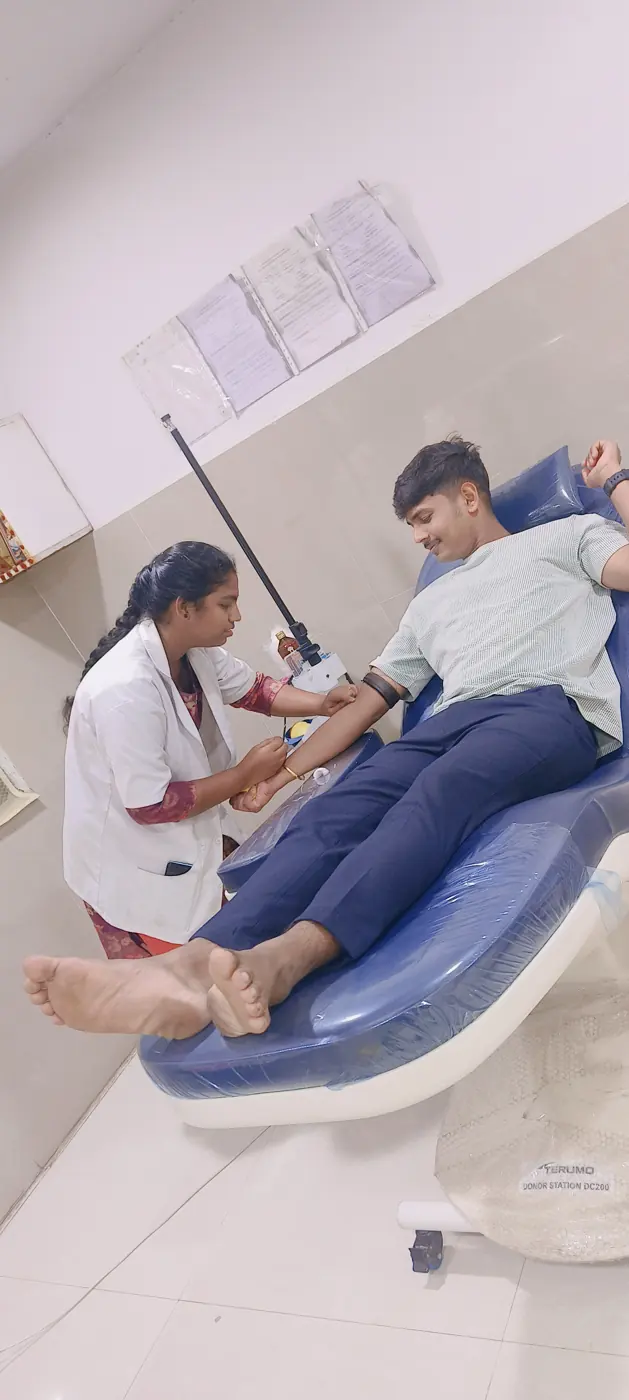
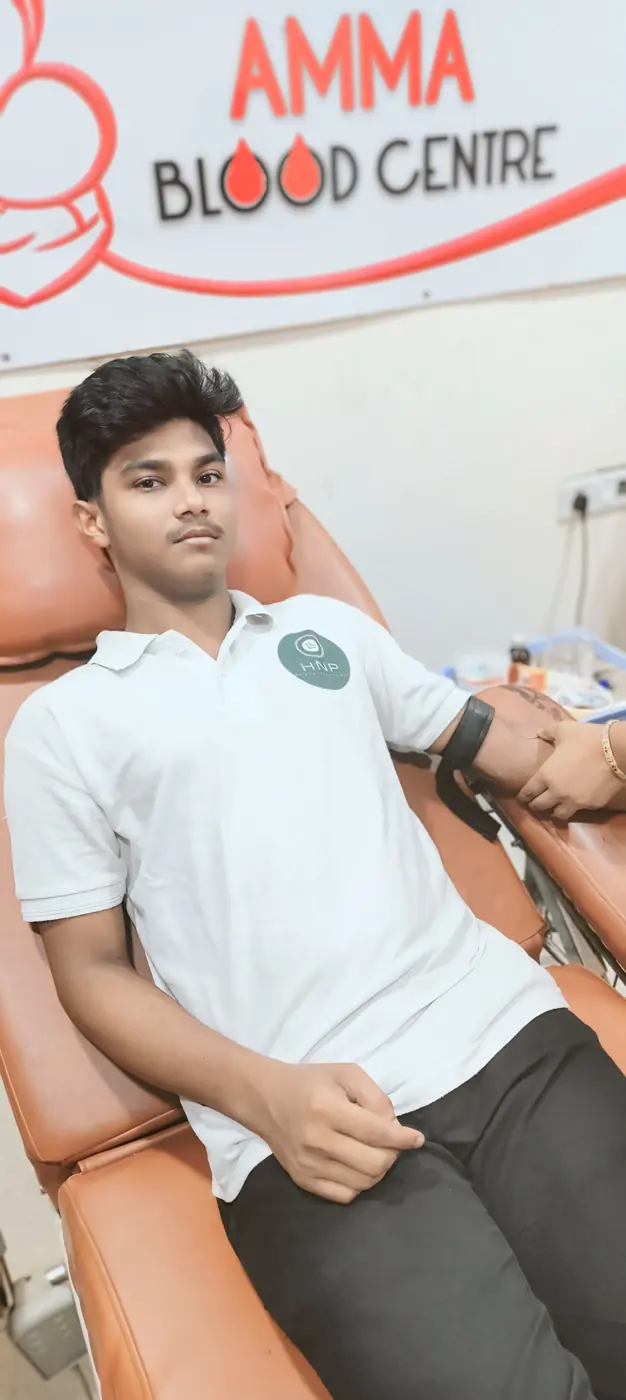
Doctors give their time on a day of their choice. The photographs from our camps show doctors in white coats standing beside volunteers in the HNP t-shirt. One poster salutes doctors on National Doctors’ Day, because without them none of this would be possible.
Nurses take readings and note them down. Volunteers register people, keep the queue moving, bring water, and help older visitors to a chair. The founder, Ravi Kiran Nalla, is named on the poster as the contact for the camp.
After the camp
A camp is a start, not an end. The visitor keeps the card with the readings. People with a high reading are asked to see a doctor again in a week or two. Volunteers call back some of them and ask whether they went.
We also use camp days to talk about habits that help: less salt, no tobacco, a walk after dinner, and clean drinking water. These small talks cost nothing and reach people who would never read a health booklet.


Numbers worth knowing
A normal resting blood pressure for an adult is about 120 over 80. A reading that stays at 140 over 90 or higher on several days is called high blood pressure and needs a doctor’s attention. At a camp, one reading is only a first look. A doctor may ask you to check again at home or at a clinic over the next few days.
For blood sugar, a fasting reading below 100 milligrams per decilitre is normal, and a reading of 126 or more on two tests suggests diabetes. A finger-prick test at a camp is a screening, not a final answer. If your reading is high, a laboratory test will confirm it.
A person who knows her own numbers can notice a change before it becomes an emergency.
A checklist for your visit
Wear loose sleeves so that the nurse can take a blood pressure reading. Eat normally unless a volunteer tells you to come fasting for a sugar test. Bring any medicines you take, in their strips or bottles, so that the doctor can read the names.
If you wear spectacles, bring them. If you have an old ECG or blood report, bring that too. A doctor can compare the new reading with the old one and tell you whether things are getting better or worse.
Bring a family member if you can. A second pair of ears helps to remember what the doctor said, and an elderly visitor is more comfortable with a relative beside her.
Warning signs that should not wait for a camp
Chest pain that spreads to the arm or jaw, sudden weakness on one side of the body, difficulty in speaking, a severe headache that comes without warning, or heavy bleeding are emergencies. Go to a hospital at once or call an ambulance.
Do not wait for the next camp if you have a fever that does not go down, a cough that has lasted more than three weeks, or a wound that is not healing. A camp is for routine checks and early warning, not for emergencies.
How you can help a camp happen
A camp costs very little compared with its reach, but it still needs money. We need to hire a hall, pay for chairs and tables, buy cotton and gloves, print cards and give the doctors and nurses a simple meal. We also need volunteers to register people and guide them.
If you own a clinic, a laboratory or a pharmacy, you can sponsor a test or a stock of medicines. If you are a student of medicine or nursing, you can volunteer for the day and learn from the doctors in the hall.
How it works
How a camp runs
One day, five stops, no charge to the visitor.
1
Register
A volunteer writes the visitor’s name, age and phone number on a card.
2
Check
A nurse takes blood pressure and a finger-prick sugar reading.
3
Test
Eyes, teeth and heart are checked at their own tables.
4
See the doctor
The doctor reads the card, listens, and writes the next step.
5
Follow up
Volunteers help with medicines and call people who need a second visit.
Questions
Camp questions
If you want to host a camp in your area, call us and we will plan it with you.
Do I have to pay to attend a camp?
Attending the camp and meeting the doctor is free. On the poster of one camp, medicines were sold at half the usual price and the Swaasa test cost one hundred rupees. Check the poster of the camp you plan to visit.
Do I need to bring anything?
Bring any old prescriptions or reports, your glasses if you wear them, and a mobile phone. If you are diabetic, ask the volunteers whether to come before or after food.
Where are camps held?
The camp on our poster was held in the Srinagar area of Gajuwaka, close to the trust office. We hold camps in other places when a local group invites us.
Can a doctor volunteer at a camp?
Yes. Doctors, nurses, dentists, eye specialists and lab technicians are always welcome. Please call and tell us what day suits you.
Can the trust give a diagnosis in writing?
The doctor at the camp writes a short note on your card. It is not a full medical record. For anything serious you will be asked to see a doctor at a hospital.
How do I know when the next camp is?
We post the date on this website and on our pages. You can also call +91 97036 30893 and ask.
Can children attend?
Yes. Children can have an eye test and a dental check. A doctor decides which other tests suit their age.
Do you do blood tests for cholesterol or thyroid?
Only the tests on the poster of the day are offered. For anything else the doctor will refer you to a laboratory.
Is my information kept private?
Yes. The card belongs to the visitor. We note only name, age, phone number and readings, and we do not share them.
Do you run camps on holidays?
We usually choose a day when most people are free. Calling ahead is the best way to confirm.
Help us hold the next camp
A camp needs a hall, chairs, a doctor and a few thousand rupees for supplies. Any gift helps, and so does an hour of your time.
Write to us
Ask about health check-up camps
Tell us what you would like to know or do about health check-up camps. A volunteer will call you back.
- +91 97036 30893 (call and PhonePe)
- +91 82972 92602 (second number)
- hnpcharitabletrust@gmail.com
- NPS Nilayam, Road No. 2, Gajuwaka S.O., Visakhapatnam, Andhra Pradesh 530026
Write to us
We use your details only to reply to this message. Read the Privacy Policy and the DPDP Act notice.