
Home / Field work / Clothes, blankets and sandals
Field work
A blanket for the cold night, sandals for the hot road
People who live outdoors feel the weather in a way that the rest of us do not. Our blanket, clothes and sandal drives meet the season with simple things that make it bearable.


In our photographs
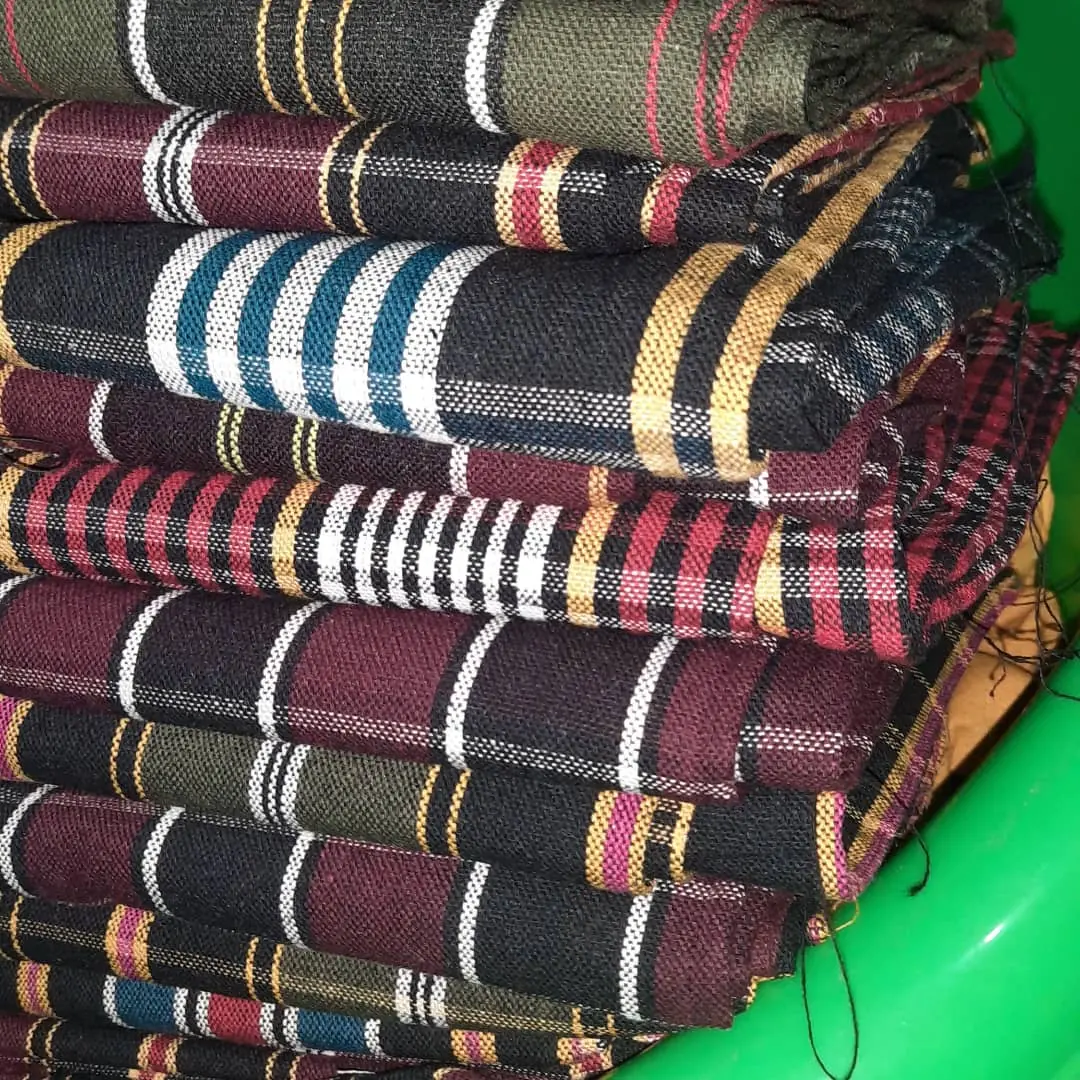
Striped blankets in a tall stack and a volunteer on his knees
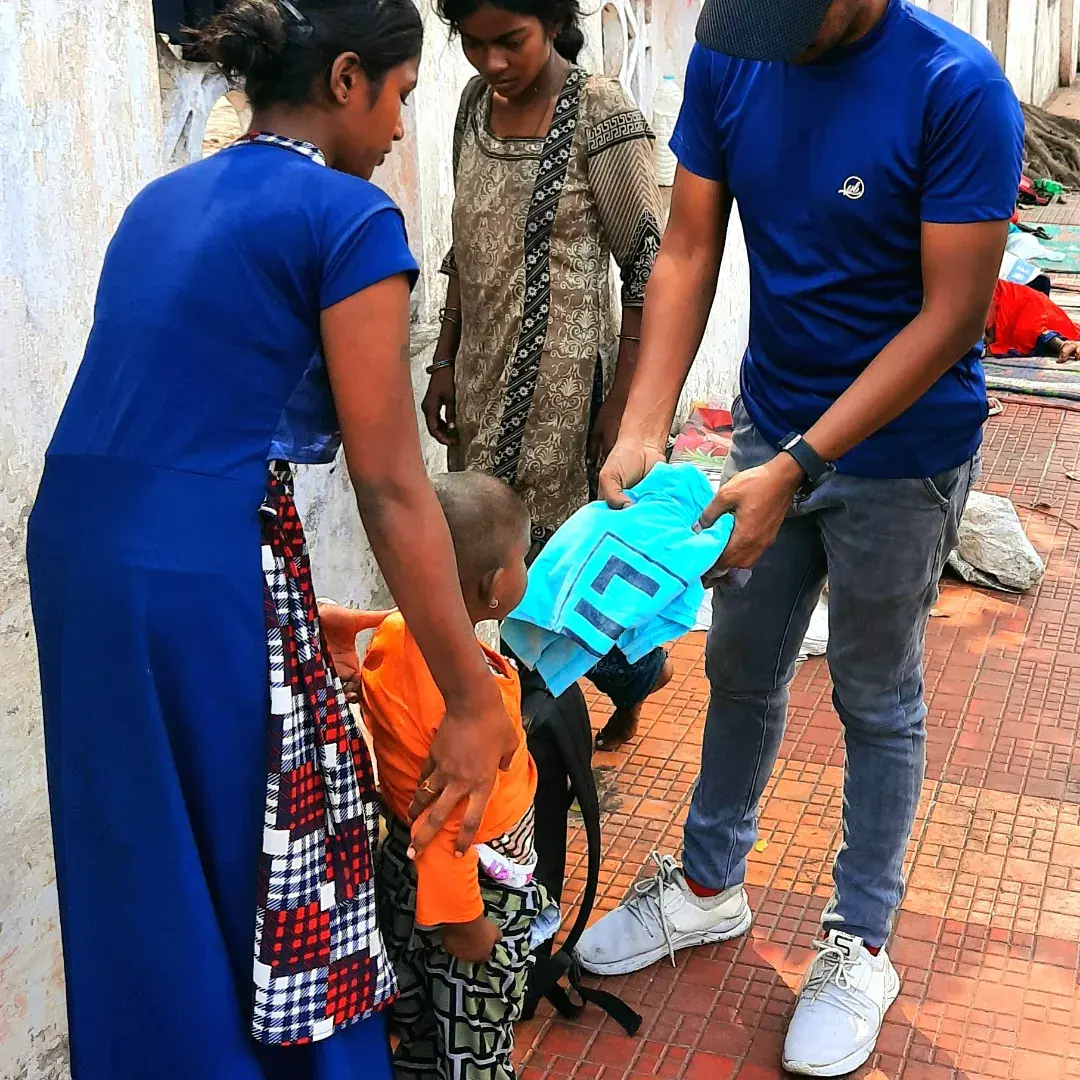
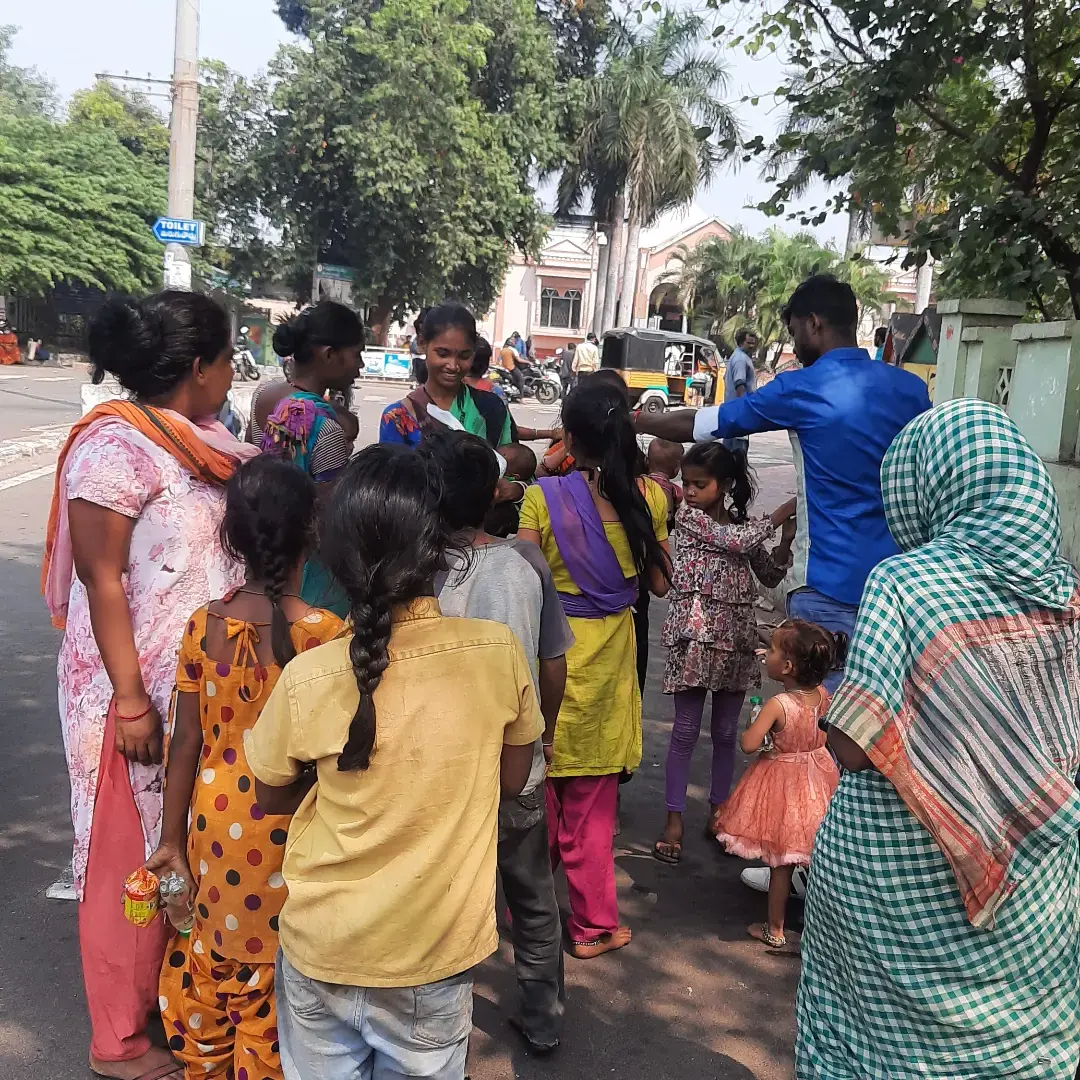
One photograph shows a tall stack of striped blankets, folded and waiting. Another shows a volunteer in a blue t-shirt handing clothes to a woman and her child on the street. Another shows a group of families gathered around volunteers at a roadside as blankets are given out.
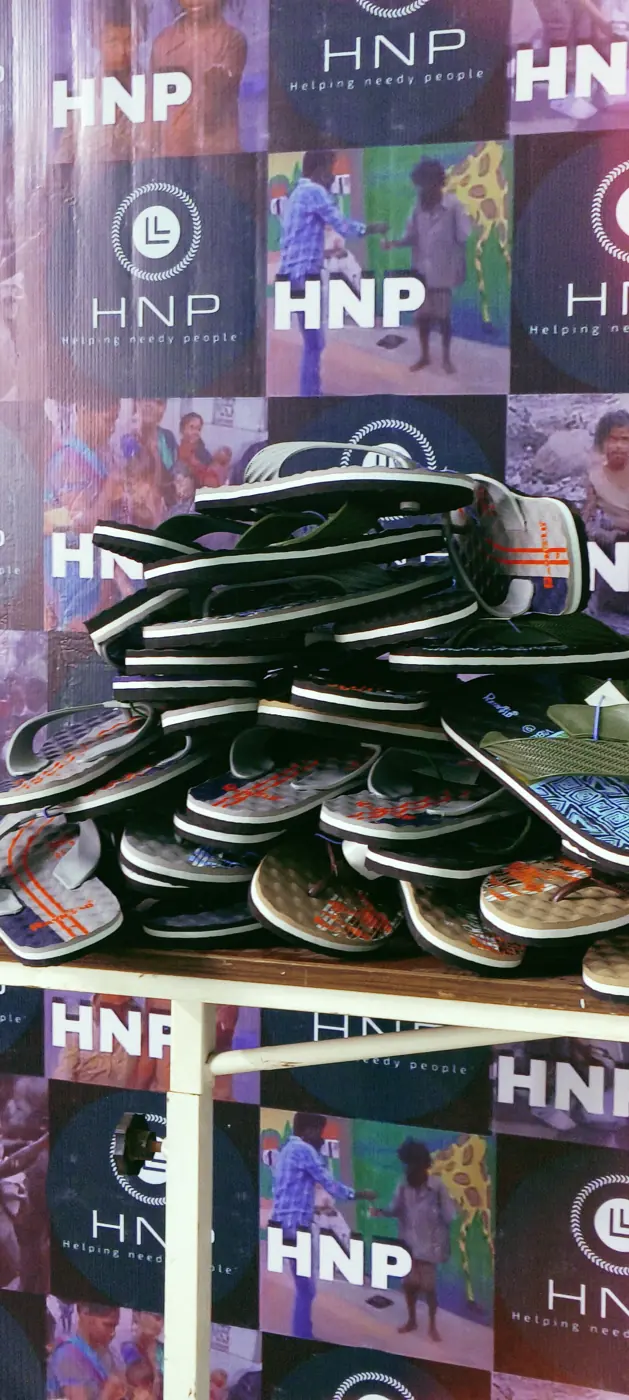
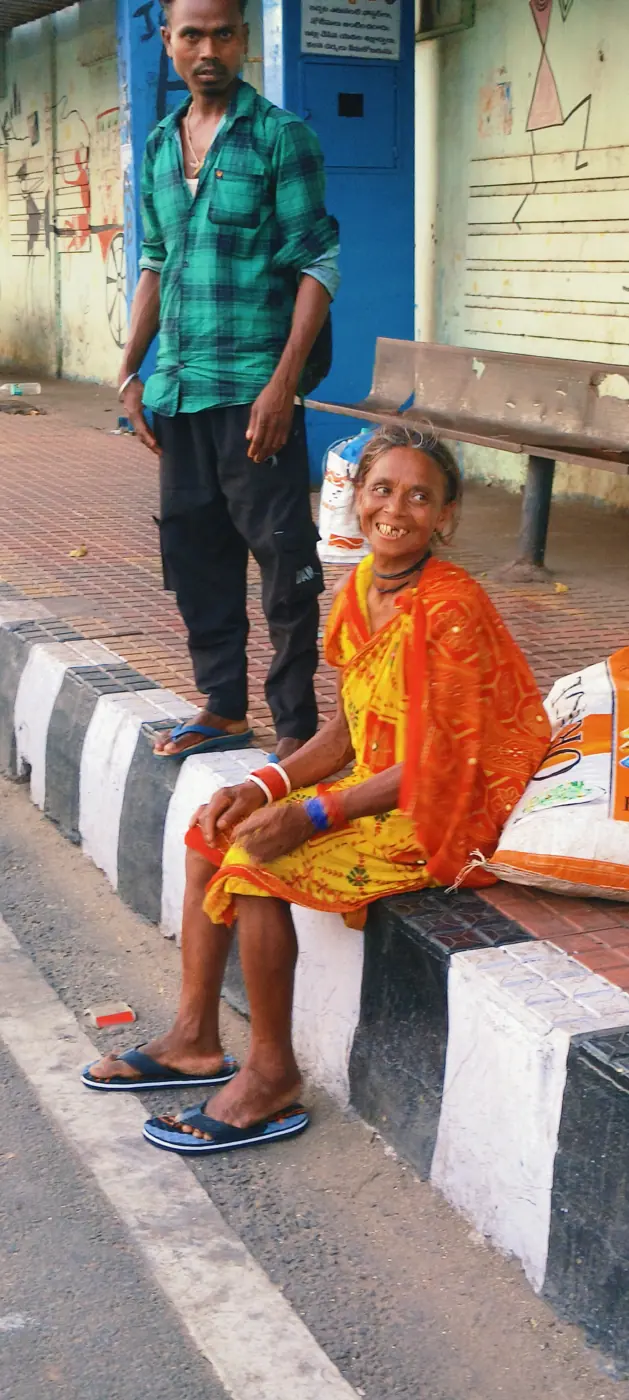
In the summer pictures, a volunteer kneels in the road and fits a pair of sandals on a man’s feet. A woman sits on a kerb in a pair of new sandals. A stack of sandals stands in front of the trust’s backdrop. A newspaper clipping in our records reports a blanket distribution for homeless people led by the trust.
The items are simple. The effect is large. A blanket keeps a person alive on a cold night. A pair of sandals saves a foot from a burn.
Blankets in winter
Winter nights in the plains are cold enough to cause real harm to people who sleep without cover. Elderly people, children and the sick are at greatest risk. A blanket is the single most useful thing that we can give.
We choose thick, durable blankets that can be washed. Where donors provide blankets, we check them for cleanliness before giving them out.
Sandals in the heat
The tarred roads of a coastal city in summer can burn bare feet. People who work as labourers, rag pickers and beggars often walk barefoot. A pair of sandals protects the feet and lets a person go on working.
We measure the foot and choose a size that fits. A sandal that is too big or too small is soon thrown away.
Clothes that fit
We give clean clothes to children, women and men. We try to match sizes. For girls and women, we give salwars and sarees in good condition. For men, shirts and trousers or lungis. For children, frocks, shirts and shorts.
Clothes that are worn or torn are not given. A person who receives a torn shirt does not feel respected.
Umbrellas for sun and rain
One of our photographs shows a pile of umbrellas in bright colours in front of the trust’s backdrop. They are given to people who stand or sit outdoors for hours: vendors, rickshaw riders and people who live on the pavement.
An umbrella is a roof that can be carried. In the monsoon it keeps a person dry. In the summer it gives shade.
How donors can help
Give blankets, sandals, umbrellas, clean clothes or money to buy them. Please wash clothes before you give them and fold them neatly. Tell us how many items you have so that we can plan the drive.
If you are a shopkeeper or a manufacturer, you can give goods at a concessional price. Please write to us.
How we decide what to give
In the cold months, blankets come first. In the hot months, sandals and umbrellas. In the rains, plastic sheets and dry clothes. For children, uniforms and school shoes before the school year begins.
We ask the people we meet what they need. A man may say that he has a blanket but no sandals. A woman may say that her child has no sweater. We note it and bring it on the next visit.

Washing, folding and giving with dignity
Clothes and blankets should be clean, folded and given with a word of respect. A volunteer who hands over a wrinkled shirt with a shrug is not giving well. We take care to present each item with care.
We ask donors to do the same. A parcel of clean, folded clothes tells the receiver that somebody cared enough to prepare it.
What happens to items we cannot use
Not everything that is offered can be given. Torn clothes, stained blankets and broken sandals are set aside. Some can be cleaned or repaired. Others are passed on to recyclers or disposed of carefully.
We tell donors honestly what we could use and what we could not.
Storing and counting
Items are stored in dry rooms and counted when they arrive and when they leave. A list of what was given, on which day and to how many people, helps us to plan the next drive and to answer donors’ questions.
If you would like to store items for us, such as in a spare room, tell us.
Partnering with schools and colleges
Schools and colleges can run clothes and blanket drives for the trust. A class can collect notebooks. A club can collect blankets. Teachers and students can volunteer for a sorting day.
We can provide a short talk and a poster for your drive. Write to us with the date.
How you can sponsor a drive
A drive of one hundred blankets, one hundred pairs of sandals or one hundred sets of clothes is a good size for a family, an office or a club. Tell us the number and the date and we will buy, sort and give.
We will send you photographs and a short note about where the items went.
Thank you for giving
Every blanket, every pair of sandals and every folded shirt is a message to a stranger: you are not alone. Thank you for sending that message.
Please keep giving, and please keep asking your friends.
How it works
A drive from start to finish
Collect, sort, distribute, record.
1
Collect
Donations are gathered at the trust’s office or a collection point.
2
Sort
Volunteers sort items by type and size and set aside anything unfit.
3
Visit
Volunteers go to the places where people sleep or gather.
4
Give
Each person receives an item by hand and a few words.
5
Record
We take photographs with permission and note how many were given.
Questions
Clothes and blankets questions
Call before you bring items so that we can meet you.
Do you take used clothes?
Yes, if they are clean and in good condition. We do not take torn or stained clothes.
Do you take shoes?
We take clean sandals and shoes in good condition, and we prefer new sandals for our summer drive.
When do you hold blanket drives?
Mainly in the cold months. Call us to ask about the next drive.
Can I sponsor sandals for a hundred people?
Yes. Write to us and we will tell you the cost on the day and plan the drive.
Can I give toys or books with the clothes?
Yes. Clean toys and books for children are welcome.
How do I know my donation reached people?
We send a photograph from the drive, and we are happy to let you come along.
Can I help sort donations?
Yes. Sorting is a good task for students and families. Call us to find a day.
Do you give to families in villages?
We go where we are invited and where need is known. Tell us the place and the number of families.
Can I give new clothes?
Yes. New clothes are especially welcome for children and for festival days.
Is there a drop-off point?
Call us and we will tell you where to bring items and when someone will be there.
Give a blanket or a pair of sandals
Small things make a season bearable. Choose what you can give and we will hand it over.
Write to us
Ask about clothes, blankets and sandals
Tell us what you would like to know or do about clothes, blankets and sandals. A volunteer will call you back.
- +91 97036 30893 (call and PhonePe)
- +91 82972 92602 (second number)
- hnpcharitabletrust@gmail.com
- NPS Nilayam, Road No. 2, Gajuwaka S.O., Visakhapatnam, Andhra Pradesh 530026
Write to us
We use your details only to reply to this message. Read the Privacy Policy and the DPDP Act notice.