
Home / Our programs / Women support
Program 07
When women stand firm, families stand firm
Many of the people we meet are women who carry a family alone. Our women support program helps them with food, skills, advice and a chance to speak.

In our photos
Rows of women, bags of groceries and trays of eggs
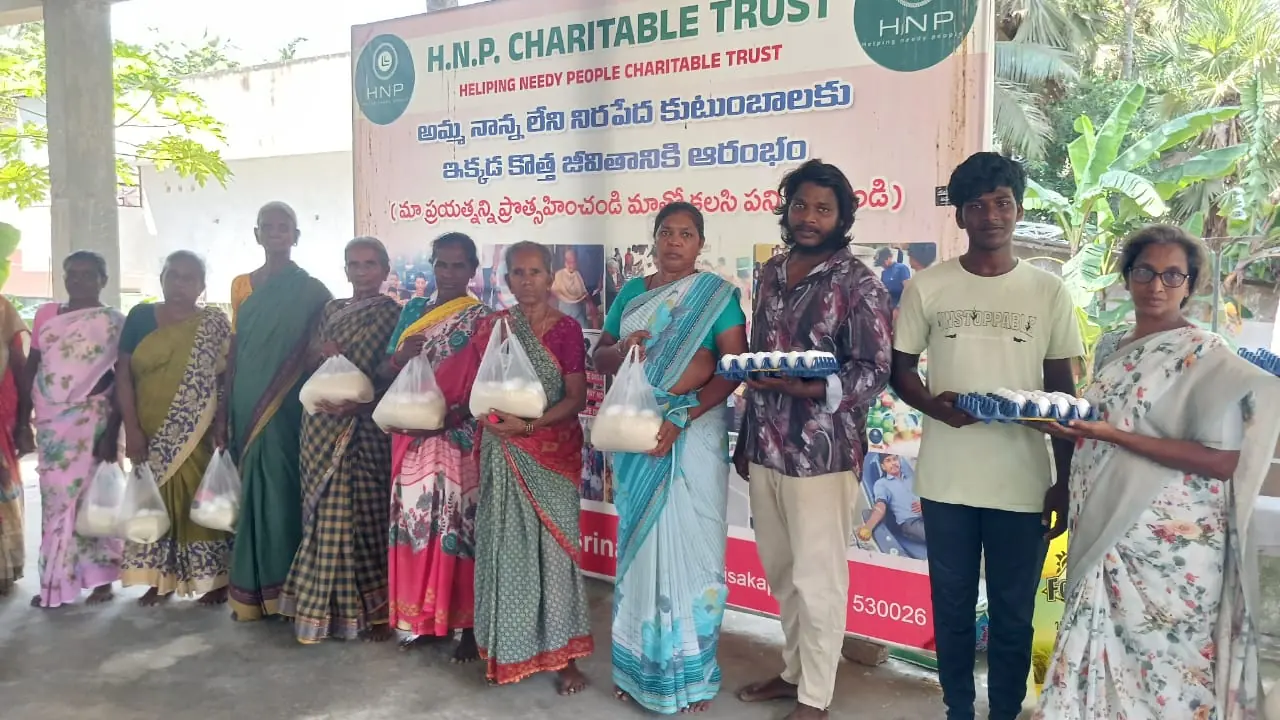
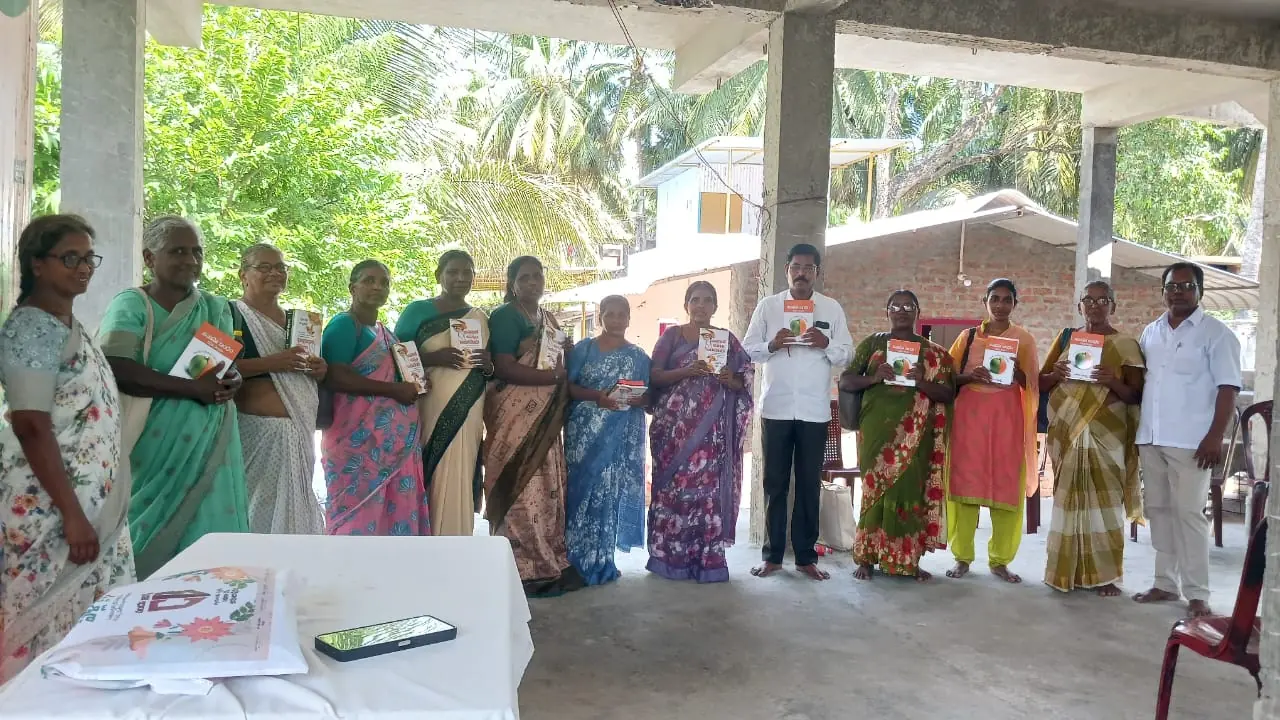
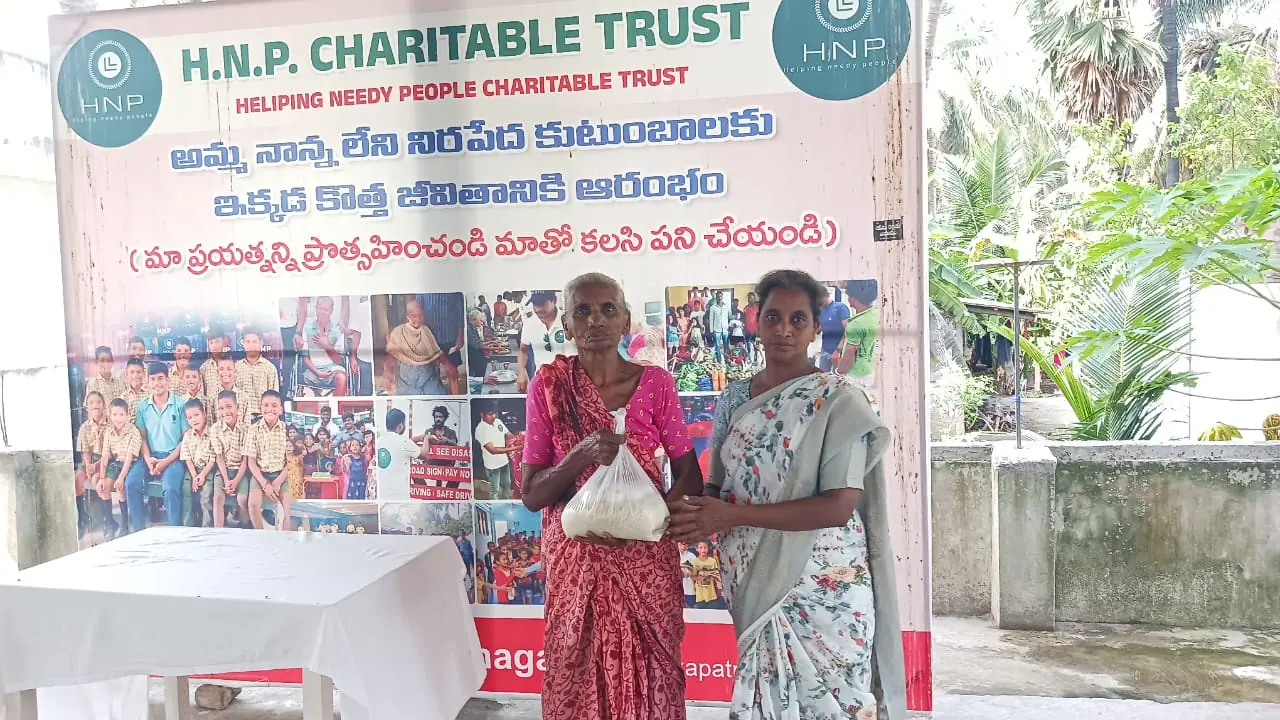
Our photos show a covered hall filled with women. They stand in a line holding bags of provisions, or sit on benches with trays of eggs on their laps. A banner of the HNP Charitable Trust hangs behind them.
These are women who have lost their husbands. Each one received groceries and eggs at a programme organised by the trust. For a woman who now earns less or nothing at all, a bag of rice and a tray of eggs is real help.
The annual report describes women’s self-reliance as the process of gaining the power and the control to make one’s own choices and to influence change in society. It says this is a basic human right.
What women ask for
When we ask women what they need, the answers are plain. A steady income. A safe place to live. School fees for the children. A doctor who will listen. Someone to call in an emergency.
The annual report lists what helps: educating women, raising awareness of their rights, giving them access to resources and opportunities, and challenging discrimination.
Education and awareness
Education is described as the most important tool. A woman who can read a bank form or a medicine label is less likely to be cheated. Awareness of her rights helps her to use them.
We hold small talks in the same halls where we distribute groceries, so that women who come for food also hear about schemes, savings and safety.
Resources and opportunities
Women need access to work as much as they need advice. This is why the skill development program teaches tailoring and embroidery, and why we try to connect women with shops and customers.
Where a woman has a small business idea, we help her think it through, including the costs, the customers and the risks.
Why this matters for everyone
The report names three kinds of benefit. Economic: when women earn, the whole household earns more. Health: women who are informed look after their own health and their children’s. Safety: awareness and independence help to prevent violence at home.
We do not claim to solve these problems. We are one small group working next to many others. But each woman we meet is a person, and each person who stands up makes the next one braver.
Rights every woman should know
A woman has the right to go to school, to hold property in her own name, to earn and keep her wages and to live without violence. Many women do not know the schemes and laws that protect them. A short talk can change that.
A group can invite a woman lawyer, doctor or teacher to speak. After the talk, a volunteer can stay to answer questions in private, because many women prefer not to ask in front of others.
Savings and small business
A woman who saves a small amount each week builds a buffer for a rainy day. A group of ten women who pool their savings can lend to one another at a fair interest. This is the idea of a self-help group, and it works because members know one another.
A woman who wants to start a small business, such as a tiffin service, a tailoring shop or a vegetable stall, can think through what she needs, how much it will cost and who will buy. We help her to write this down.
Health and safety
Women often put their own health last. Our health camps offer tests that matter to women, and the poster of one camp lists a Pap smear and a doctor’s consultation. We encourage women to come, and we have women volunteers at the registration table.
We also share phone numbers of the police, the women’s help line and nearby hospitals so that a woman in trouble knows whom to call.
When a husband dies
A woman who loses her husband loses a wage and often a home. Relatives may turn away. Official papers such as a death certificate, a pension form or a ration card transfer can take months. Our volunteers sit with the family and help to fill the forms.
The photos from our widow support programme show women queuing for groceries and eggs. The food is the first help. The next steps are papers, school for the children and a means of earning.
How to speak to a woman in distress
Begin by finding a private place. Do not speak in front of neighbours or children. Sit at the same level as the woman, and let her set the pace. Do not interrupt, argue or give advice too early.
Say plainly that you believe her. Ask what she needs now, and what she would like to do. Write down the facts only with her consent. Tell her what you can do, and what you cannot. If she is in danger, help her to reach a safe place and call the right authority.
Never share a woman’s story without her permission. Never take a photograph of a woman in distress. A person who trusts you with her story is trusting you with her safety.
How it works
How we help a woman
Listen first, then act.
1
Listen
A volunteer meets the woman, usually at home, and hears her story.
2
Support
We give groceries, eggs or a food kit to meet the first need.
3
Teach
We offer a place in a skill course or a talk on her rights.
4
Connect
We link her to schemes, doctors, schools and, where possible, work.
Questions
Women support questions
Please tell us about a woman who needs help. We will visit with respect.
Who can get help?
Women who have lost their husbands, women who are the only earner in the family, and women in difficult situations at home. We look at each case on its own.
How do I ask for help?
Call us or fill in the form on this page. We will arrange a visit.
Do you keep names private?
Yes. We do not publish a woman’s name or a photo without her permission.
Do you give money?
We give food, material and training. When someone has an urgent medical need, we help her to find care.
Can men volunteer for this program?
Yes. Both men and women volunteer, but we always send a woman volunteer for a first home visit.
How can I support the program?
Sponsor a grocery kit, a place in a skill course, or give a sewing machine.
Is there a women's help line?
Yes. The national women’s help line number is 181. We keep it on our posters and ask volunteers to share it.
Do you offer legal help?
The founder of the trust holds an LLB. For legal advice we can point you to the right office. We do not charge for guidance.
Can I donate a sewing machine or a grinder?
Yes. Working machines and tools can help a woman start a small business.
Can I mentor a woman starting a business?
Yes. Call us. A few hours of advice from a businessperson are valuable.
Can a woman bring her children to a session?
Yes. A mother should never have to leave her children to attend a talk or a course. We keep a corner for children with toys and a volunteer to watch them.
Do you help women find jobs?
We help with skills and with links to shops and employers who need workers. We do not promise a job, but we keep trying until the woman has a way to earn.
Stand beside a woman who is standing alone
A grocery kit or a seat in a course can turn a bad month into a way forward.
Write to us
Ask about women support
Tell us what you would like to know or do about women support. A volunteer will call you back.
- +91 97036 30893 (call and PhonePe)
- +91 82972 92602 (second number)
- hnpcharitabletrust@gmail.com
- NPS Nilayam, Road No. 2, Gajuwaka S.O., Visakhapatnam, Andhra Pradesh 530026
Write to us
We use your details only to reply to this message. Read the Privacy Policy and the DPDP Act notice.